Archive for Facebook
Events (Includes Events Policies and the 2026 Events Calendar)
Posted by: | CommentsFCS is a growing, dynamic sportsmen’s organization. For the last 15 years (and 18 out of the previous 20 years), we have had more events than there are weeks in the year, or as many events as there are weeks in the year. As the bird hunting seasons limit events planning, we frequently have more than one event on the same day during the various bird hunting seasons.
Important Links
Duck Hunting 101 Trips by Randy Rowley
FCS Chartered Fishing Trips Fish Sharing Requirements
FCS Guided and Self-guided Duck and Teal Hunts Agility Requirement
FCS Guided Upland Bird Hunts Fitness and Bird Sharing Requirements
Freshwater Fishing 101 Trips by Randy Rowley
Information on Frequently-hosted FCS Events
Shotgun Shooting 101 Events by Randy Rowley
2026 FCS Events Calendar (Note that dates are not final until they are announced in our weekly E-Newsletters)
January
- Saturday, 1/3/26, 9:00 AM – 11:30 AM – FCS Sporting Clays Shoot at Capital City Clays (8707 Lindell Lane, Austin, Event Coordinator – Brad Versteegh)
- Sunday, 1/4/26 – Self-guided/chartered Inland Kayak Blast and Cast (Duck Hunt and Freshwater Fishing Trip) at the DeLoach Ranch’s lake near Taylor (Event Coordinator – Randy Rowley)
- Thursday, 1/8/26, PM – Sunday, 1/11/26, PM – Self-chartered Boat Bay Fishing Trip at Port O’Connor (Event Coordinator – Wayne Weilnau)
- Friday, 1/9/26 PM – Guided Coastal Duck Hunt with Avian Skies near Port O’Connor (Event Coordinator – Wayne Weilnau)
- Friday, 1/16/26 – Saturday, 1/17/26, AM (Friday is a travel day) – Guided Inland Duck Hunt with Sandy Bottom Outfitters on Lake Fork (Event Coordinator – Jeff Morris)
- Saturday, 1/17/26 – Self-guided Inland Kayak Duck Hunt at the DeLoach Ranch’s lake near Taylor (Randy ; Event Coordinator – Randy Rowley)
- Monday, 1/19/26 – Self-guided/chartered Inland Kayak and Jon Boat Blast and Cast (Duck Hunt and Freshwater Fishing Trip) at the DeLoach Ranch’s lake near Taylor (Event Coordinator – Randy Rowley)
- Saturday, 1/24/26 – Self-guided Boat Inland Duck Hunt on Lake Stillhouse Hollow, going up the Lampasas River (we will use Randy Rowley’s boat to get to the hunting area but will hunt from shore) (Event Coordinator – Randy Rowley)
- Saturday, 1/31/26 – ‘Jeff Foster Memorial’ NSCA Sporting Clays Tournament at Capital City Clays (8707 Lindell Lane, Austin, Event Coordinator – Brad Versteegh)
Total – 9
February
- Saturday, 2/7/26, 9:00 AM – 11:30 AM – FCS Sporting Clays Shoot at Capital City Clays (8707 Lindell Lane, Austin, Event Coordinator – Brad Versteegh)
- Monday, 2/16/26, AM – Self-chartered Kayak and Bank Freshwater Fishing Trip on Lake Devine (Event Coordinator – Randy Rowley)
- Tuesday, 2/17/26, 7:00 – 9:30 PM – FCS Meeting (Social Activity) featuring a Gumbo Dinner, Door Prizes Drawing, Upcoming Events Discussion, and Devotional at Randy and Chris Rowley’s home, Event Coordinator – Randy Rowley)
- Sunday, 2/22/26 – ‘Sweetheart Shoot’ NSCA Sporting Clays Tournament at Capital City Clays (8707 Lindell Lane, Austin, Event Coordinator – Brad Versteegh)
- Wednesday, 2/25/26, 6:30 – 8:30 PM – FCS Officers Meeting at C.R. Surf & Turf (601 E Whitestone Blvd., #200, Cedar Park), Event Coordinator – Randy Rowley)
- Saturday, 2/28/26, AM – Self-chartered Boat Freshwater Fishing Trip on Lake Stillhouse Hollow (Event Coordinator – Randy Rowley)
Total – 6
March
- Monday, 3/2/26, AM – Self-chartered Bank Freshwater Fishing Trip on two Santa Rita Ranch North ponds (Event Coordinator – Randy Rowley)
- Saturday, 3/7/26, 9:00 AM – 5:00 PM – Guided Upland Bird Hunt with Mike Schumann near Dime Box (Event Coordinator – Randy Rowley)
- Saturday, 3/14/26, 9:00 – 11:30 AM – FCS Sporting Clays Shoot at Capital City Clays (8707 Lindell Lane, Austin, Event Coordinator – Brad Versteegh)
- Saturday, 3/21/26 – ‘March Madness’ NSCA Sporting Clays Tournament at Capital City Clays (8707 Lindell Lane, Austin), Event Coordinator – Brad Versteegh)
- Saturday, 3/28/26, AM – Self-chartered Boat Freshwater Fishing Trip on Lake Bastrop (Event Coordinator – Randy Rowley)
Total – 5
April
- Friday, 4/3/26, AM – Self-chartered Kayak Freshwater Fishing Trip on the DeLoach Ranch’s lake near Taylor (Event Coordinator – Randy Rowley)
- Saturday, 4/11/26, 9:00 AM – 3:00 PM – FCS Sporting Clays Shoot) at Capital City Clays (8707 Lindell Lane, Austin) Event Coordinator – Brad Versteegh)
- Thursday, 4/16/26, 7:00 – 9:30 PM – FCS Meeting (Social Activity) featuring a Steak Dinner, Door Prizes Drawing, Upcoming Events Discussion, and Devotional at Flint Deshazo’s home, Event Coordinator – Randy Rowley)
- Saturday, 4/18/26, AM – Self-chartered Boat Freshwater Fishing Trip on Lake Travis (Event Coordinator – Randy Rowley)
- Thursday, 4/23/26, AM – Self-chartered Boat Freshwater Fishing Trip on Lake Stillhouse Hollow (Event Coordinator – Randy Rowley)
- Saturday, 4/25/26, AM – Self-chartered Boat Freshwater Fishing Trip on Lake Travis (Event Coordinator – Randy Rowley)
- Wednesday, 4/29/26, 7:00 – 9:00 PM – Family Celebration Banquet at La Margarita Restaurante (1530 N. Interstate 35 Frontage Rd., Round Rock), Event Coordinator – Binh Chu)
Total – 7
May
- Saturday, 5/9/26, 9:00 – 11:30 AM – Spring FCS Open (Two Rounds of Sporting Clays and Lunch) at Capital City Clays (8707 Lindell Lane, Austin), Event Coordinator – Brad Versteegh)
- Wednesday, 5/20/26 – Saturday, 5/23/26 – Self-guided Prairie Dog Shoot (Hunt) in the Rita Blanca Grasslands near Dalhart (Event Coordinator – Bob Steckler)
- Saturday, 5/23/26, AM – Self-chartered Bank Freshwater Fishing Trip on a Santa Rita Ranch North pond (Event Coordinator – Randy Rowley)
- Saturday, 5/23/26 – ‘Charlie Parker Memorial’ NSCA Sporting Clays Tournament at Capital City Clays (8707 Lindell Lane), Event Coordinator – Brad Versteegh)
- Monday, 5/25/26, 6:00 AM – Self-chartered Kayak Freshwater Fishing Trip on the DeLoach Ranch’s lake near Taylor (Event Coordinator – Randy Rowley)
- Thursday, 5/28/26 – Sunday, 5/31/26 – Self-Chartered Kayak Bay Fishing Trip at Port O’Connor (Event Coordinator – Wayne Weilnau)
- Sunday, 5/31/26, AM – Chartered Hybrid/Striped Bass Fishing Trip with Seth Hobbs of La Belle Fishing Guide Service on Lake Buchanan (Event Coordinator – Randy Rowley)
Total – 7
June
- Saturday, 6/6/26, AM – Self-chartered Kayak Freshwater Fishing Trip on the DeLoach Ranch’s lake near Taylor (Event Coordinator – Randy Rowley)
- Saturday, 6/6/26, 9:00 – 11:30 AM – FCS Sporting Clays Shoot at Capital City Clays (8707 Lindell Lane, Austin), Event Coordinator – Brad Versteegh)
- Sunday, 6/7/26, AM – Self-chartered Kayak Freshwater Fishing Trip on the DeLoach Ranch’s lake near Taylor (Event Coordinator – Randy Rowley)
- Saturday, 6/13/26, AM – Self-chartered Kayak and Pond Boat Freshwater Fishing Trip on the DeLoach Ranch’s lake near Taylor (Event Coordinator – Randy Rowley)
- Saturday, 6/20/26 – ‘Capital City Classic’ NSCA Sporting Clays Tournament at Capital City Clays (8707 Lindell Lane, Austin, Event Coordinator – Brad Versteegh)
- Sunday, 6/21/26, AM – Chartered Catfish Fishing Trip with Seth Hobbs of La Belle Fishing Guide Service on Lake Buchanan (Event Coordinator – Randy Rowley)
- Tuesday, 6/23/26, 7:00 – 9:30 PM – FCS Meeting (Social Activity) featuring a Shrimp Boil, Door Prizes Drawing, Upcoming Events Discussion, and Devotional at Wayne Weilnau’s home, Event Coordinator – Randy Rowley)
- Saturday, 6/27/26, AM – Self-chartered Kayak and Pond Boat Freshwater Fishing Trip on the DeLoach Ranch’s lake near Taylor (Event Coordinator – Randy Rowley)
Total – 8
July
- Sunday, 7/5/26 – ‘Firecracker Special’ NSCA Sporting Clays Tournament at Capital City Clays (8707 Lindell Lane, Austin, Event Coordinator – Brad Versteegh)
- Friday, 7/10/26, AM – Self-chartered Kayak and Pond Boat and Bank Freshwater Fishing Trip on the DeLoach Ranch’s lake near Taylor (Event Coordinator – Randy Rowley)
- Saturday, 7/11/26, 9:00 – 11:30 AM – FCS Sporting Clays Shoot at Capital City Clays (8707 Lindell Lane, Austin), Event Coordinator – Brad Versteegh)
- Saturday, 7/25/26, AM – Self-chartered Kayak and Pond Boat Freshwater Fishing Trip on the DeLoach Ranch’s lake near Taylor (Event Coordinator – Randy Rowley)
Total – 4
August
- Saturday, 8/8/26, 9:00 – 11:30 AM – FCS Sporting Clays Shoot at Capital City Clays (8707 Lindell Lane, Austin), Event Coordinator – Brad Versteegh)
- Monday, 8/10/26, 7:00 – 9:30 PM – FCS Meeting (Social Activity) featuring a Fish Fry, Door Prizes Drawing, Upcoming Events Discussion, and Devotional at Randy and Chris Rowley’s home, Event Coordinator – Randy Rowley)
- Saturday, 8/15/26, AM – Self-chartered Boat Freshwater Fishing Trip on Lake Austin (Event Coordinator – Randy Rowley)
- Saturday, 8/22/26, AM – Self-chartered Kayak and Pond Boat Freshwater Fishing Trip on the DeLoach Ranch’s lake near Taylor (Event Coordinator – Randy Rowley)
- Thursday, 8/27/26, AM – Self-chartered Kayak Freshwater Fishing Trip on Lake Decker; Event Coordinator – Randy Rowley)
Total – 5
September
- Tuesday, 9/1/26, AM – Thursday, 9/3/26, PM (the hunt will be on Tuesday, 9/1/26, PM – Thursday, 9/3/26, AM) – Semi-guided South Zone Dove Hunt with Seco Creek Dove Hunts near Devine (Event Coordinator – Myrick Browning)
- Tuesday, 9/1/26 – Semi-guided Central Zone Dove Hunt with Triple T at China Creek Ranch near San Saba (Event Coordinator – Mike Walsh)
- Tuesday, 9/1/26, PM – Semi-guided Central Zone Dove Hunt with All Around Outfitters LLC near San Antonio (Event Coordinator – Kurt DeRuiter)
- Wednesday, 9/2/26, PM – Semi-guided Central Zone Dove Hunt with All Around Outfitters LLC near San Antonio (Event Coordinator – Kurt DeRuiter)
- Saturday, 9/5/26 – Semi-guided Central Zone Dove Hunt with Triple T at China Creek Ranch near San Saba (Event Coordinator – Mike Walsh)
- Saturday, 9/5/26, PM – Semi-guided Central Zone Dove Hunt with All Around Outfitters LLC near San Antonio (Event Coordinator – Kurt DeRuiter)
- Monday, 9/7/26, AM – Self-chartered Kayak and Pond Boat Freshwater Fishing Trip on the DeLoach Ranch’s lake near Taylor (Event Coordinator – Randy Rowley)
- Saturday, 9/12/26, 9:00 – 11:30 AM – FCS Sporting Clays Shoot at Capital City Clays (8707 Lindell Lane, Austin), Event Coordinator – Brad Versteegh)
- Saturday, 9/12/26, PM – Semi-guided Central Zone Dove Hunt with All Around Outfitters LLC near San Antonio (Event Coordinator – Kurt DeRuiter)
- Friday, 9/18/26 – Saturday, 9/19/26 (Friday is a travel day) – Guided Inland Teal Hunt with an outfitter and at a location TBD (Event Coordinator – Jeff Morris)
- Saturday, 9/19/26, PM – Semi-guided Central Zone Dove Hunt with an outfitter near San Antonio (Event Coordinator – Kurt DeRuiter)
- Friday, 9/25/26 – Saturday, 9/26/26 (Friday is a travel and wait in line day) – Self-guided Coastal Teal Hunt at the Guadalupe Delta Wildlife Management Area (WMA) near Tivoli (Event Coordinator – Clayton Carrier)
- Saturday, 9/26/26 – ‘Patriot Day’ NSCA Sporting Clays Tournament at Capital City Clays (8707 Lindell Lane, Austin), Event Coordinator – Brad Versteegh)
- Saturday, 9/12/26, PM – Semi-guided Central Zone Dove Hunt with an outfitter near San Antonio (Event Coordinator – Kurt DeRuiter)
Total – 14
October
- Friday – Sunday (with Friday being a travel day; dates TBD) – Semi-guided Hog Hunt near Hamilton, Event Coordinator – Randy Rowley)
- Saturday, 10/3/26, PM – Chartered Crappie Fishing Trip with Tommy Tidwell’s Granger Lake Guide Service (Event Coordinator – Randy Rowley)
- Tuesday, 10/6/26, 4:00 – 7:00 PM – Ministry Event (National Night Out Dinner) for the residents of the Pathways at Northgate Apartments (for people who are disabled or involuntarily displaced by a natural disaster or government action), (9120 Northgate Blvd, Austin), Event Coordinator – Tim Zyla)
- Saturday, 10/11/26 – ‘Smashing Pumpkins’ NSCA Sporting Clays Tournament at Capital City Clays (8707 Lindell Lane, Austin), Event Coordinator – Brad Versteegh)
- Thursday, 10/15/26, 7:00 – 9:30 PM – FCS Meeting (Social Activity) featuring a Chili Dinner, Door Prizes Drawing, Upcoming Events Discussion, and Devotional at Bruce Crockett’s home, Event Coordinator – Randy Rowley)
- Saturday, 10/17/26, 9:00 AM – 3:00 PM – Fall FCS Open (Two Rounds of Sporting Clays and Luncheon) at Capital City Clays (8707 Lindell Lane, Austin), followed by lunch at Maxine’s Gumbo House (11007 US 290, Manor, right next to Cafe 290, Event Coordinator – Brad Versteegh)
- Saturday, 10/24/26 – Sunday, 10/25/26 – NSCA National Sporting Clays Championship (Tournament) at The National Shooting Complex (5931 Roft Road, San Antonio) (Event Coordinator – TBD)
Total – 7
November
- Friday, 11/6/26 – Sunday, 11/8/26 (Friday is a travel and wait in line day) – Self-guided Coastal Duck Hunt at the Guadalupe Delta Wildlife Management Area (WMA) near Tivoli (Event Coordinator – Clayton Carrier)
- Sunday, 11/8/26 – ‘Give ’em the Bird’ NSCA Sporting Clays Tournament at Capital City Clays (8707 Lindell Lane, Austin), Event Coordinator – Brad Versteegh)
- Thursday, 11/12/26 – Sunday, 11/15/26 – Self-Chartered Boat Bay Fishing Trip serving Wounded Warriors at Port O’Connor (Event Coordinator – Wayne Weilnau)
- Friday, 11/13/26 – Sunday, 11/15/26 (Friday is a travel day) – Self-guided Duck Hunt at a location TBD (Event Coordinator – Clayton Carrier)
- Saturday, 11/14/26, 9:00 – 11:30 AM – FCS Sporting Clays Shoot at Capital City Clays (8707 Lindell Lane, Austin), Event Coordinator – Brad Versteegh)
- Friday, 11/20/26 – Sunday, 11/22/26 (Friday is a travel and orientation day) – Self-guided Duck Hunt at a location TBD (Event Coordinator – Clayton Carrier)
- Friday, 11/27/26 – Sunday, 11/29/26 (Friday is a travel and orientation day) – Self-guided Duck Hunt at a location TBD (Event Coordinator – Clayton Carrier)
Total – 7
December
- Friday, 12/4/26 – Saturday, 12/5/26, AM (Friday is a travel day) – Guided Inland Duck Hunt with Sandy Bottom Outfitters near Lake Richland Chambers (Event Coordinator – Jeff Morris)
- Friday, 12/4/26 – Sunday, 12/6/26, AM (Friday is a travel day) – Guided Inland Duck Hunt with Texas Duck Factory near Sweetwater (Event Coordinator – Randy Rowley)
- Monday, 12/7/26 – Wednesday, 12/9/26 (Monday is a travel day) – Guided Sandhill Crane Hunt with Waterproof Ranch Outfitters near Colorado City (Event Coordinator – Rick Brettnacher)
- Thursday, 12/10/26, 7:00 – 9:30 PM – FCS Meeting (Social Activity) featuring a Wild Game Dinner, Door Prizes Drawing, Upcoming Events Discussion, and Devotional at Burl Fulenwider’s home, Event Coordinator – Randy Rowley)
- Friday, 12/11/26 – Sunday, 12/13/26 (Friday is a travel day) – Self-guided Duck Hunt at a location TBD (Event Coordinator – Clayton Carrier)
- Saturday, 12/12/26, 9:00 – 11:30 AM – FCS Sporting Clays Shoot at Capital City Clays (8707 Lindell Lane, Austin), Event Coordinator – Brad Versteegh)
- Friday, 12/18/26 – Sunday, 12/20/26 (Friday is a travel day) – Self-guided Duck Hunt at a location TBD (Event Coordinator – Clayton Carrier)
- Sunday, 12/27/26 – ‘Year End Finale’ NSCA Sporting Clays Tournament at Capital City Clays (8707 Lindell Lane, Austin), Event Coordinator – Brad Versteegh)
Total – 8
Grand Total – 87
| Events Summary | |
| Events | Number |
| Self-chartered Freshwater Fishing Trips | 20 |
| Sporting Clays Tournaments | 11 |
| FCS Sporting Clays Shoots | 10 |
| Semi-guided Dove Hunts | 9 |
| Self-guided Duck Hunts | 8 |
| FCS Meetings/Dinners | 6 |
| Guided Duck Hunts | 4 |
| Chartered Freshwater Fishing Trips | 3 |
| Self-chartered Bay Fishing Trips | 3 |
| FCS Opens (Sporting Clays Shoots and Lunch) | 2 |
| Self-guided/chartered Inland Blasts and Casts (Duck Hunts and Freshwater Fishing Trips) | 2 |
| Family Celebration Banquet | 1 |
| FCS Officers Meeting | 1 |
| Guided Prairie Dog Shoot (Hunt) | 1 |
| Guided Teal Hunt | 1 |
| Guided Sandhill Crane Hunt | 1 |
| Guided Upland Bird Hunt | 1 |
| Ministry Event (Dinner) | 1 |
| Self-guided Teal Hunt | 1 |
| Semi-guided Hog Hunt | 1 |
| Total | 87 |
| Category Summary | |
| Events | Number |
| Hunting Trips | 29 |
| Fishing Trips | 26 |
| Sporting Clays Shoots and Tournaments | 23 |
| Meetings | 7 |
| Family Celebration Banquet | 1 |
| Ministry Event (Dinner) | 1 |
| Grand Total | 87 |
List of Officers Overseeing 2026 Events
Randy Rowley (the Chartered Freshwater Fishing Trips, Guided Inland Duck Hunt (Sweetwater), Guided Upland Bird Hunt, Meetings, Self-chartered Freshwater Fishing Trips, and Self-guided WMA Duck Hunt Czar) will oversee the planning, promotion, and reporting of the following events:
- Chartered Crappie Fishing Trip (Lake Granger) (one event)
- Chartered Hybrid/Striped Bass Fishing Trip (Lake Buchanan) (two events)
- FCS Meetings (six events)
- Guided Duck Hunt (one event)
- Guided Upland Bird Hunt (one event)
- Officers Meeting (one event)
- Self-chartered Freshwater Fishing Trips (20 events; 12 are kayak/pond boat trips (two include bank fishing), six are boat trips, and two are bank trips)
- Self-guided Duck Hunts (two events; one is a Inland Duck Hunt in a WMA and one is an Inland Kayak Duck Hunt on a private lake)
- Self-guided/chartered Blasts and Casts (two events – both are Inland Duck Hunts and Freshwater Fishing Trips – one is a Kayak Trip and one is a Kayak and Jon Boat Trip)
- Semi-guided Hog Hunt (one event)
Total = 37 events
Brad Versteegh (the Sporting Clays Shoots and Sporting Clays Tournaments Czar) will oversee the planning and reporting of the following events:
- FCS Open’s (Two Rounds of Sporting Clays (each shoot) and Lunch) (two events)
- FCS Sporting Clays Shoots (10 events)
- Sporting Clays Tournaments (10 events)
Total = 22 events
Clayton Carrier (the Self-guided WMA Duck and Teal Hunts Czar) will oversee the planning and reporting of the following events:
- Self-guided Coastal WMA Duck Hunts (six events)
- Self-guided Coastal WMA Teal Hunt (one event)
Total = seven events
Kurt DeRuiter (Semi-guided Dove Hunts Czar – San Antonio) will oversee the planning and reporting of the following events:
- Semi-guided Dove Hunts (six events)
Total = six events
Wayne Weilnau (the Port O’Connor (POC) Self-chartered Bay Fishing Trips and Guided Coastal Duck Hunt Czar) will oversee the planning and reporting of the following events:
- Guided Coastal Duck Hunt (one event)
- Self-chartered Bay Fishing Trips (three events)
Total = four events
Jeff Morris (the Guided Inland Duck and Teal Hunts (Lake Richland Chambers) Czar) will oversee the planning and reporting of the following events:
- Guided Duck Hunts (two events)
- Guided Teal Hunt (one event)
Total = three events
Mike Walsh (Semi-guided Dove Hunts Czar – San Saba) will oversee the planning and reporting of the following events:
- Semi-guided Dove Hunts (two events)
Total = two events
Rick Brettnacher (the Guided Sandhill Crane Hunt Czar) will oversee the planning and reporting of the following event:
- Guided Sandhill Crane Hunt (one event)
Total = one event
Myrick Browning (the Semi-guided Dove Hunt Czar for Seco Creek Dove Hunts) will oversee the planning and reporting of the following event:
- Semi-guided Dove Hunt (Seco Creek) (one event)
Total = one event
Binh Chu (the Family Celebration Banquet Czar) will oversee the planning and reporting of the following event:
- Family Celebration Banquet (one event)
Total = one event
Bob Steckler (the Guided Prairie Dog Shoot Czar) will oversee the planning and reporting of the following event:
- Guided Prairie Dog Shoot (one event)
Total = one event
Tim Zyla (the Ministry Events Czar) will oversee the planning and reporting of the following event:
- Ministry Event (National Night Out Dinner at the Pathways at Northgate Apartments) (one event)
Total = one event
TBD (the non-Capital City Clays Sporting Clays Tournament Czar) will oversee the planning and reporting of the following event:
- NSCA National Sporting Clays Championship (Tournament) (one event)
Total = one event
Grand Total = 87 events
| Events Preparation Grid | |||
| Event / Event Coordinator | Planning begin date | Contact | Notes |
| Chartered Bass Fishing Trips | Dates are set each October during our annual Calendar planning; trip planning is generally at least two months before a trip | Ander Meine – Bassquatch Bass Fishing Guide Service – 435-313-1838 |
|
| Chartered Bay Fishing Trips / Wayne Weilnau | Dates are set each October during our annual Calendar planning; trip planning is generally at least two months before a trip | Guides:
We’ll stay at Wayne’s house, in Burl’s travel trailer, The O’Connor Inn (361-983-2300), a motel, a Bunk Hut, or an Airbnb |
|
| Chartered Crappie Fishing Trips / Randy Rowley | Dates are set when there is interest | Guides:
|
|
| Chartered Hybrid / Striped / White Bass Fishing Trips / Randy Rowley | Dates are set each October during our annual Calendar planning; trip planning is generally at least two months before a trip | Guides:
|
|
| Chartered Largemouth Bass Fishing Trips / Randy Rowley | Dates are set each October during our annual Calendar planning; trip planning is generally at least two months before a trip | Guides:
|
|
| Family Celebration Banquet / Binh Chu | Dates are set each October during our annual Calendar planning; banquet planning is generally at least two months before a banquet | La Margarita Restaurante – 512-388-1103 |
|
| FCS Sporting Clays Shoots / Brad Versteegh | Dates are set each October during our annual Calendar planning | Call Capital City Clays at least a week before a shoot (512-272-4707), talk to them in person at the previous shoot, give them our Annual Calendar, or look at their calendar to ensure that there isn’t a conflict |
|
| FCS Sporting Clays Shoot that includes a youth group / Randy Rowley | Dates are set each October during our annual Calendar planning, if our Ministry Fund has adequate funds | Call Capital City Clays at least a week before the shoot (512-272-4707), talk to them in person at the previous shoot, give them our Annual Calendar, or look at their calendar to ensure that there isn’t a conflict |
|
| FCS Student Sporting Clays Shoots / Randy Rowley | The National Shooting Complex sets the dates | The National Shooting Complex contacts:
|
|
| Guided Coastal Duck Hunts / Wayne Weilnau | Mid-July for duck season; trip planning is generally at least four months before a trip | Guides:
We’ll stay at Wayne’s house, in Burl’s travel trailer, The O’Connor Inn (361-983-2300), or an Airbnb |
|
| Guided Prairie Dog Shoot / Bob Steckler | Dates are set each October during our annual Calendar planning; planning is generally at least two months before a shoot | Texas Hunts |
|
| Guided Upland Bird Hunt(s) / Randy Rowley | Dates are set each October during our annual Calendar planning; trip planning is generally at least two months before a trip | Mike Schumann – schubros2hunt@yahoo.com, 979-540-0745, 1009 PR 4531, Dime Box TX, 77853. PayPal deposits go to LRSchumann@hotmail.com |
|
| Guided Waterfowl Hunts / Jeff Morris | Mid-May for teal season; trip planning is generally at least four months before a trip. Deposit due 6/15.Mid-July for duck, geese, and sandhill crane seasons; trip planning is generally at least four months before a trip. Deposit due 9/15. | Teal guides:
Duck guides – the above, plus:
|
|
| Meetings / Randy Rowley | Dates and locations are set each October during our annual Calendar planning; meeting planning is generally at least two weeks before the meeting | Varies |
|
| Ministry Events (Cook hamburgers and hotdogs) / Tim Zyla | Dates are set each October during our annual Calendar planning; ministry event planning is generally at least two months before a ministry event | Done on the National Night Out from 4:30 – 7:30 PM at Pathways of Northgate apartments (a Housing Authority of the City of Austin (HACA) property for people who are disabled and/or involuntarily displaced by a natural disaster or government action; mostly single mothers and their children; 9120 Northgate Blvd, Austin), Kareema Ali, Cell: 512-619-6642 |
|
| Ministry Events (Wild Game Dinners) / Tim Zyla | Dates are set each October during our annual Calendar planning; ministry event planning is generally at least two months before a ministry event | 4:30 – 7:30 PM at the St. George’s Court Apartments (for people 62+ years old or who are disabled; 1443 Coronado Hills Drive, Austin), Meryl Getty (Family Eldercare) –mgetty@familyeldercare.org – 737-239-3040 |
|
| Officers Meetings / Randy Rowley | Date(s) and location(s) are set each October during our annual Calendar planning, or as called by Randy; meeting planning is generally at least two weeks before the meetings | Varies |
|
| Self-chartered Bay Fishing Trips to Port O’Connor / Wayne Weilnau | Dates are set each October during our annual Calendar planning; trip planning is generally at least two months before a trip | We’ll stay at Wayne’s house, in Burl’s travel trailer, The O’Connor Inn (361-983-2300), or an Airbnb |
|
| Self-chartered Freshwater Fishing Trips / Randy Rowley | Dates are set each October during our annual Calendar planning; trip planning is generally at least a week before a trip | Self |
|
| Self-guided / chartered Blasts and Casts (not to POC) / Randy Rowley | Dates are set each October during our annual Calendar planning; trip planning is generally at least two months before a trip | Self |
|
| Self-guided / chartered Coastal Blasts and Casts to Port O’Connor / Wayne Weilnau | Dates are set each October during our annual Calendar planning; trip planning is generally at least two months before a trip | We’ll stay at Wayne’s house, Burl’s travel trailer, The O’Connor Inn (361-983-2300), or an Airbnb |
|
| Self-guided Duck and Teal Hunts / Clayton Carrier | Dates are set each October during our annual Calendar planning; trip planning is generally at least a week before a trip | Self |
|
| Self-guided Hog Hunts / Randy Rowley | TBD, as there are opportunities | TBD |
|
| Semi-guided Deer Hunts / Randy Rowley | Dates are set when there is interest | TBD |
|
| Semi-guided Dove Hunts / Kurt DeRuiter and Randy Rowley (Holland) | Dates are set each October during our annual Calendar planning; trip planning is generally at least two months before a trip |
|
|
| Semi-guided Hog Hunts / Randy Rowley | Dates are set each October during our annual Calendar planning | Outfitters:
|
|
| Sporting Clays Tournaments / Brad Versteegh (for the Capital City Clays tournaments) | Capital City Clays, the Copperhead Creek Shooting Club, the Austin Gun Club, The National Shooting Complex, etc., set the dates | No contact is needed – shooters register online |
|
WMAs that Allow Dove Hunting
Posted by: | CommentsDo you know if WMAs allow dove hunting?
Some WMAs and lands that partner with the TPWD allow dove hunting. All of these lands require the TPWD annual public hunting permit. Here are their Public Hunting Lands.
Some US Army Corps of Engineer WMAs allow dove hunting. Each lake has different rules. Some require a USACE lake permit. Some require a TPWD annual public hunting permit. Some require neither. For example, Lakes Stillhouse Hollow and Belton near Austin don’t require any permits. But Lake Granger near Austin requires the TPWD annual public hunting permit. Here is their Hunting Guide.
Some US Fish and Wildlife Department National Wildlife Refuges (NWRs) allow dove hunting. They require Proof of Hunter Education for people born after September 2, 1971. They also allow only steel shot (which I’ve had bad experiences with) and only two boxes of shells. These include:
- Balcones Canyonlands (near Marble Falls)
- Buffalo Lake (in the Panhandle)
- Hagerman (in North Texas)
- Lower Rio Grande Valley
- Santa Ana (in the Valley)
Here’s a TPWD article on dove hunting in South Texas.
Although hunting a WMA can be rewarding they can be hazardous (people often don’t adhere to gun safety rules). I recommend that you don’t set up within shotgun range of people who you don’t know.
They also can be productive but are often only productive on opening day. FCS dove hunted at the Balcones Canyonlands WMA on September the 2nd a few years ago. As I recall, I only fired eight shots and killed three dove.
Self-chartered Freshwater Fishing Trips
Posted by: | CommentsRandy Rowley hosts several self-chartered freshwater fishing trips on central Texas lakes within 100 miles of his home in Leander. He primarily targets largemouth bass, but can also go after crappie, white bass, hybrids/stripers, and catfish, so he recommends to bring at least one light rod/reel combo (for reel type, line, and lure recommendations see the bottom of this web page).
Do not expect limits on these fishing trips, as Randy has a full-time job, isn’t a guide, fishes on weekends or state of Texas holidays (usually), and fishes on highly pressured lakes. However, Randy and company often have some success, including:
-
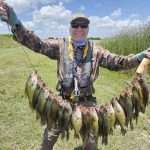
- Jim McGee
-
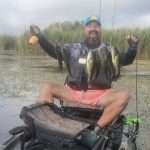
- Raul Pena
-
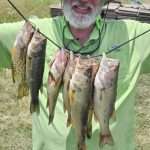
- Randy Rowley
-
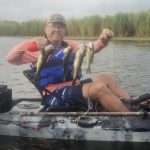
- Al Atkins
-
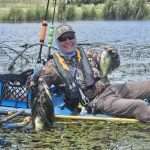
- Jim with crappie
-
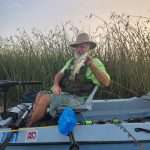
- Randy in his new-to-him pond boat
-
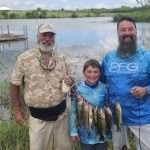
- Randy Rowley, Eli Pena, and Raul Pena
-
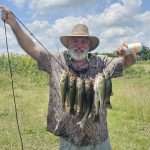
- Randy Rowley
-
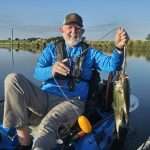
- An earlier picture of Larry and his keepers
-
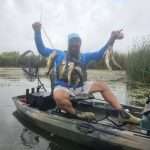
- Raul Pena
-

- Roy Zengerle, Jim McGee, and Randy Rowley with 38 white bass and one crappie
-

- Jim McGee, Randy Rowley, and Russ Gibbs with 30 channel catfish and a white perch
-

- Burl Fulenwider, Jim McGee, and Randy Rowley with nine white bass, a 14″ crappie, another legal crappie, and two channel catfish.
-

- Chris Rowley with her FCS Self-chartered Fishing Trip record 23 3/4″, 6.18 lb. largemouth bass
-
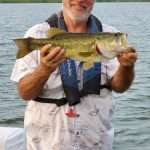
- Randy Rowley and his 4.72 lb., 21 1/2″ largemouth bass – his heaviest largemouth to date
-

- Ryan Rowley with his 21 1/2″ hybrid bass, his personal best
-

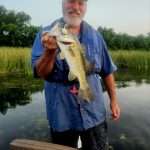
- Randy Rowley with his 20″ largemouth bass
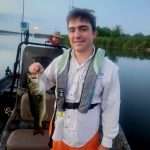
-

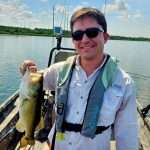
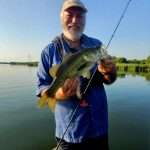
- Claire Rowley with her 19 1/2″ hybrid bass
-

- Randy Rowley and his 18 1/2-inch-long, 2.60 lb. channel catfish caught on a lipless crankbait
-

- Jeff Cates with his 18″ largemouth bass
-

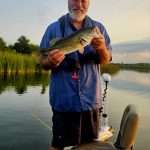
- Chris Rowley with her 18″ largemouth bass
-
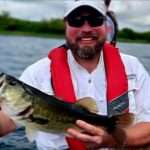
- Ryan Rowley and his 17″ largemouth bass
-
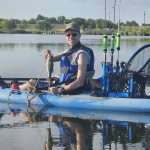
- Regan with one of his bass
-
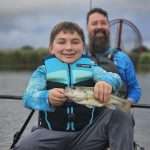
- Eli
-
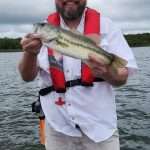
- Ryan and his 16 1/2″ largemouth bass
-

- Daylee Trevino with her 16 1/4″ largemouth bass
-
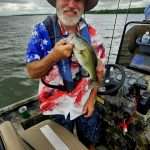
- Randy Rowley and his 16″ largemouth bass
-
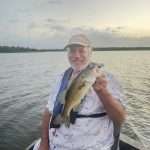
- Randy and his 15 3/4″ largemouth bass
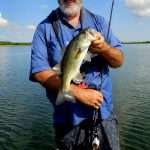
-

- Roland Olivarez with his 15″ largemouth bass
-

- Michael Beaver with his 14″ largemouth bass
-

- Luis Almanza with Randy Rowley’s 13 1/4″ largemouth bass
-
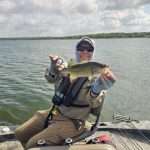
- Jim McGee and his unmeasured largemouth bass
-

- Randy Rowley’s largemouth bass and Burl Fulenwider’s and Russ Gibbs’ largemouth bass (a triple)!
-

- Russ Gibbs channel catfish and Randy Rowley and Jim McGee with their channel catfish (a triple)!
-

- Randy and Ryan Rowley doubled up on largemouth bass!
-

- Randy Rowley with two white bass
Randy will fish either Lakes Austin, Bastrop, Belton, Buchanan, Fayette, LBJ, Somerville, Stillhouse Hollow, Travis; a river, such as the San Gabriel off of Lake Granger; or a creek, such as Yegua Creek off of Lake Somerville during the white bass run. He can take up to three fishermen if fishing with lures (if they’re very experienced or if we’re fishing with live or dead bait or jigging with slabs). If the fishermen are inexperienced, he’ll only take two. Trips will usually be six to ten hours, counting travel time, unless the fish are biting well, in which case they may decide to fish later, or if they’re not biting well or at all, in which case they may decide to quit earlier.
They will fish out of Cam – Randy’s 20′ 3″ 2019 Excel Bay Pro 203 with a 115 HP Yamaha motor, an 80 lb. thrust trolling motor, and two fish finders (unless we’re fishing a river or creek during the white bass run, in which case they’ll be on foot) (see below).
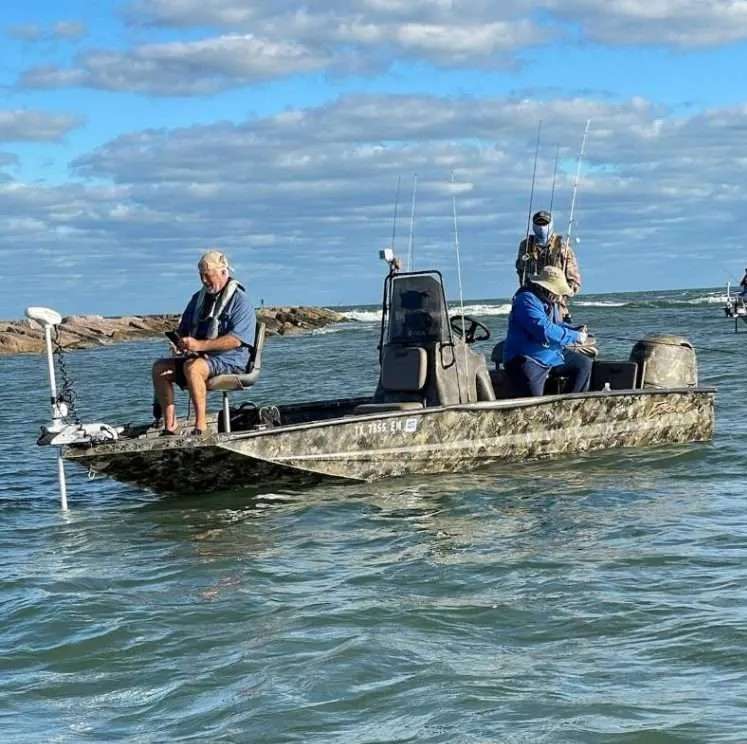
Randy usually has at least one of these trips a month during non-duck hunting months (February through September), but will not guarantee a set number of times.
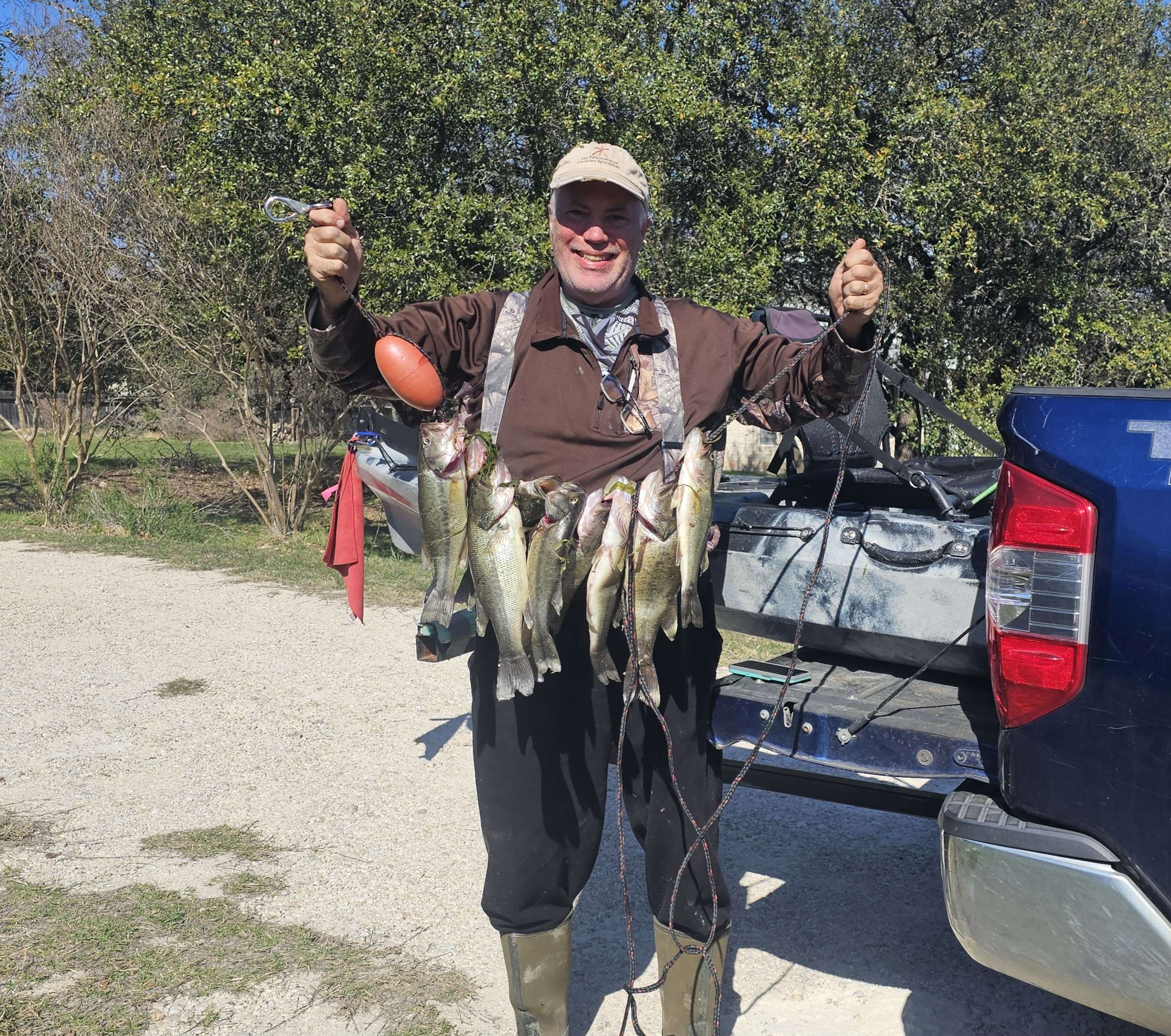
In 2025 Randy started fishing from kayaks on ponds, such as a 35-acre pond near Taylor (where the owner also has a Jon boat that is available for FCS members and guests to use), Lakeline Park pond (Muir Lake), and Lake Decker. In 2026 he added Divine Lake in Leander. The Rowley’s have two fishing kayaks – one is often available on Randy’s kayak trips.
Decker and Bastrop have 14″ – 21″ slot limits, which allows you to keep up to five bass under 14″ or up to four bass under 14″ and one bass over 21″. Any bass between 14″ – 21″ must be returned to the water. The reason that the authorities have slot limits is those lakes are small and; therefore, can easily be depleted of bass. Slot limits ensure that there will be a lot of 1 1/2 – 5 lb. bass for people to catch. Fayette has a 16″ – 24″ slot limit for the same reason (any bass between 16″ – 24″ must be returned to the water). Its slot limit ensures that there will be a lot of two – seven lb. bass for people to catch.
Costs:
- The participants (excluding Randy, if Cam is being used) will split the vehicle and boat gas (the amount depends on the distance traveled and the number of people sharing the gas), state or county park fees (if applicable), boat launch fees (if applicable), and toll road fees (if applicable). Randy has to replace Cam’s batteries, trailer tires and wheel bearings, etc., and repair things like Cam’s trolling motor more quickly due to taking FCS members and guests on such trips than he would if didn’t take FCS members and guests on such trips; therefore, he’s exempt from the above expenses. If you look at what he spends on the above, he guarantees you that he’s not making any money on these trips. If Randy isn’t bringing Cam, the expenses will be split evenly among the participants.
- We probably will stop at Whataburger on the way to the lake and might stop for brunch on the way home.
- Fishermen can use artificial lures and/or buy live and/or dead bait. Randy usually fishes with artificial lures.
- If we buy bait and ice the cost will be split by everyone.
What to Bring:
- Freshwater fishing license.
- Rod & Reel combos (at least two in case you break one and no more than five).
- Lures and/or terminal tackle for fishing with live and/or dead bait.
- Tackle box, bag, or backpack.
- Headlamp or cap light (waterproof is recommended).
- Cap/hat (optional) and clothing appropriate for the season. You never know when it will rain, so bring rain gear.
- Drinks and snacks (optional; drinks are highly recommended). There are storage compartments in Cam to put your drinks and snacks in.
- Sunglasses (optional, but highly recommended).
- Bug repellent (optional, but recommended)
- Sunscreen (optional, but experts recommend it)
- A fillet knife, knife sharpener, gallon-sized Ziploc bag, and a medium-sized hard or soft ice chest, if fish are kept (Randy usually returns largemouth bass to the water; there will be a large ice chest on Cam to put your drinks in and storage compartments to put your snacks in; leave your ice chest in your vehicle).
- Water shoes or waders (if the water is cold) to help put Cam back on his trailer.
Randy has nine life jackets and three ponchos in Cam, so you won’t need either one. However, you can bring your own if you want to.
Randy has extras of many of the items that are listed above and will happily loan things if you let him know that you would like to borrow something before leaving. Of course, if you borrow something and break or lose it he will expect reimbursement, including lures that were borrowed and lost or broken.
Expectations
These fishing trips are a service to FCS members and guests, but Randy will enforce the below expectations:
- Follow Randy’s instructions and abide by the FCS Bylaws Regarding Conduct.
- Pay your fair share of truck and boat gas and park entrance fees/boat launch fees.
- Pay for items (that are not yours) that you broke or lost (including lures that you borrowed and broke or lost).
- Help (including helping get Cam back on his trailer).
- Be prepared to fish (if Randy or others must help you rig properly while on the boat, it takes away from their fishing time). This does not apply to new fishermen.
- Talk quietly (fish can hear you and will swim away from the noise).
- Show up.
- Be on time.
- Don’t have a pattern of canceling at the last minute.
- Read Randy’s emails and don’t ask questions that have already been answered in his emails (and you would have known the answers if you had read his emails).
- Return Randy’s phone calls and/or emails, if he asks a question or asks you to acknowledge something.
Let Randy know if you have any questions.
How to cast a baitcasting reel.
Rod & Reel recommendations for Bass and Bay Fishing
See Baitcasting Rods & Reels for Freshwater and Bay Fishing.
Lure recommendations for Bass Fishing
Topwaters – walk-the-dog zigzag lures like River2Sea’s Rover, Lucky Craft’s Sammy and Gunfish, Heddon’s Zara Spook and Zara Spook Jr., Xcalibur’s Spittin’ Image, and Rapala’s Skitter V; poppers like Heddon’s Chugger Spook and Hula Popper, Storm’s Rattlin’ Chug Bug, and Rebel’s Pop-R; torpedo lures like River2Sea’s Whopper Plopper and Heddon’s Baby Torpedo; and Buzz baits like Booyah’s Buzz Clacker. Colors – bass, shad, chartreuse, bone, and clear. For lakes with a lot of grass (such as Bastrop, Decker, and Fayette) you can add frog-colored soft plastic frogs such as River2Sea’s Phat Mat Daddy, Bully Wa II, and Spittin’ Wa, Lunkerhunt’s Lunker Frog, Strike King’s KVD Sexy Frogs, American Baitworks’ Scum Frog Bigfoot, Scum Dog, and Scum Frog Popper, and toad style baits such as Stanley’s Ribbits.
Lipless crankbaits – Rapala’s Rippin’ Rap and Rattlin’ Rapala, Xcalibur’s Xr75 or Xr50, Strike King’s Red Eye Shad, 6th Sense’s Quake 70, 80, and THUD and Snatch 70X, Berkley’s Warpig, BOOYAH’s One Knocker, Yo-Zuri’s Rattl’n Vibe and 3DB Vibe, and Bill Lewis’ Rat-L-Trap. Colors – bass, shad, perch, red (best in spring), and chartreuse (best in the summer).
Crankbaits – Norman’s Deep Little N and Little N, Strike King’s Pro-Model 3XD and 3XD, Rapala’s DT-10, DT-8, DT-6, Scatter Rap, and Shad Rap, 6th Sense’s Crush 250 MD, Curve 55, and Cloud 9 C6 and C10, Bomber’s Flat A, 5A, and 6A, Bandit’s 100, 200 and 300 Series, and Storm’s Wiggle Wart. Use the same colors as the lipless crankbaits.
Deep diving crankbaits – Norman’s DD-22, Bomber’s Deep Fat Free Shad and Fat Free Shad, Strike King’s 5XD, 6XD, 8XD, and 10XD, and 6th Sense’s Cloud 9 C15, C20, and C25 and Crush 300DD and 500DD. Use the same colors as the lipless crankbaits.
Square bill crankbaits – River2Sea’s Biggy Poppa, Strike King’s KVD 2.5, Rapala’s Crankin’ Rap 03, Storm’s Arashi, Spro’s Little John, Zoom’s W.E.C. E-1, E-2 and E-3, Luck-E-Strike’s Rick Clunn RC2, 6th Sense’s Fishing Crush 50X and Cloud 9 Magnum Squarebill, Yo-Zuri’s 3DB, BOOYAH’s XCS Series, and Rebel’s Bluegill. Use the same colors as the lipless crankbaits.
Jerk baits (stick baits) – Bomber’s Long A, Rapala’s Husky Jerk and X-Rap, Smithwick’s Rattlin’ Rogue, and Storm’s Thunderstick. Same colors as the crankbaits.
Spinnerbaits/chatterbaits (aka bladed swim jigs and vibrating jigs) – white, yellow, chartreuse, combo white/yellow or white/chartreuse, watermelon (green), red (in the spring), and black/blue or black/red when it’s dark or there is a heavy overcast. I prefer spinnerbaits with two blades over one. The type is not that important but I tend to prefer the Colorado blade, as they dive deeper. Spinnerbait brands include River2Sea, Nichols, Strike King, BOOYAH, Terminator, and War Eagle. Chatterbait brands include Z-man, Strike King, BOOYAH, and Terminator. Spinnerbaits on steroids include Umbrella/Alabama rigs.
Slabs/spoons – 1/2 – 1 1/2 ounce in white, silver, chartreuse, or combos of those colors. These are particularly good for white bass, hybrids, stripers along steep rocky ledges.
Soft plastics (usually will only attract largemouth bass – not whites, hybrids, or stripers) – Zoom’s finesse worms, flukes, crawdads, lizards, or baby brush hogs, Berkley’s power worms, crawdads, or lizards, Gary Yamamoto’s Senko and Swimming Senko worms, Yum Dinger’s worms, Big Bite worms and grubs, Grandebass’ rattlesnakes, and Blakemore’s Road Runner with grub tails. Colors depend on the time of year and such things as if it’s overcast or sunny. The general rule is darker colors work best when it’s overcast and during the winter. Lighter colors work best in the fall, spring, and summer and when it’s sunny. Some of Randy’s favorite colors include Green Pumpkin, Watermelon, Watermelon Red, June Bug, Red Bug, Red Shad, Motor Oil, Pumpkinseed, Dark Blue, and Camo. Zoom’s Baby Brushhog in pumpkinseed is a good choice for Travis in the fall. Lizards and crawdads in pumpkinseed are good in the spring. Soft swimbaits are good in the grass.
Lure Recommendations for Crappie (also good for white bass)
Crappie jigs (Big Bite Baits 2-Eye 1-Color Round Jigheads 1/16 or 1/8 ounce in white or pink with Bobby Garland’s Mo’Glo (glow-in-the-dark) 2″ Baby Shad in Ghost Sparkle, Monkey Milk Glo, Ghastly Minnow, or Electric Chicken Glo).
Spinners – Blakemore’s Crappie Slab Spanker 1/16 oz Rigged Lure in pearl white or silver, Johnson’s Beetle Spin (1/8 or 1/4 oz. in white and red or chartreuse), or inline spinners such as Yakima’s Rooster Tail 1/16 oz. in white or pink).
Line Recommendations for Bass Reels
Baitcasting reels
If targeting largemouth bass, I prefer 12 lb. or 14 lb. test Suffix Elite monofilament (mono). Mono is good for most topwaters, crankbaits, spinnerbaits, chatterbaits, hard jerkbaits, hard swimbaits, spoons, and slabs. Mono is regarded as all-purpose line (or for most purposes).
Fluorocarbon (fluoro) is better at getting lures to dive deeper, but it can pull topwaters down, so don’t use it for them. I prefer 14 or 17 lb. test Berkley Vanish.
For most soft plastics, I use 30 lb. test Suffix 832 braid. For frogs, I use 50 or 65 lb. test braid, to pull bass out of lily pad fields or thick grass.
When choosing fishing line, don’t use line that is too stiff (e.g., 20 lb. test mono) as it will impede a lure’s action, or too light (e.g., 8 lb. test mono) as a big fish can break it, so use the middle road.
Spinning reels
Spinning reels shine using light lures, which most baitcasting reels have trouble with. I recommend 8 – 10 lb. fluorocarbon.
Spincast reels
These are the least desirable reels for bass reels. Most are cheaply made and will not last long if used regularly. Most spincast reels come pre-spooled with cheaply-made 10 lb. test mono. If that’s the case for your reel, I’d remove it and replace it with 10 lb. test Suffix Elite mono.
Line Recommendations for Crappie Reels
Spinning reels (preferred)
Use 2 – 8 lb. test Berkley Vanish fluoro.
Ultralight spincast reels
Use 2 – 8 lb. test Suffix Elite mono.
Baitcasting reels
Don’t use baitcasting reels for crappie. They won’t be able to cast the light lines and lures that are required.
Prairie Dog Shoots (Hunts)
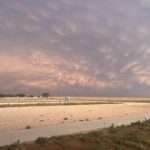
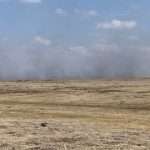
Posted by: | Comments5/20/26 – 5/23/26 Prairie Dog Shoot (Hunt) near Dalhart
-
- Bob Steckler
-
- Dan Rogers
-
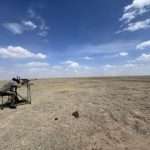
- Jason Lott
-
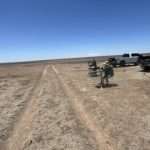
- The shooting line
-
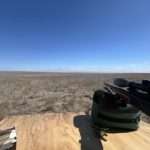
- The view down range
How to Post
Posted by: | CommentsOnly FCS administrators/managers can create a post on the website or respond to a post. If you wish to have something posted or to reply to a post, contact Randy Rowley, FCS president.
Who can buy FCS Gear?
Posted by: | CommentsAnyone can buy FCS Gear at any time. FCS Gear can be mailed to your address or are available at Club Meetings and many other FCS events. For all FCS Gear purchases except the Magellan Fishing Shirts (the details are explained on the FCS Gear web page) please make your check out to “FCS” and mail it to Randy Rowley, FCS President, along with your order. Please do not send cash. Contact Randy for his address.
If you would like to have an item(s) shipped to you please indicate the address that you would like it (them) shipped to and include in your check enough money to cover the cost of postage and a large envelope (see the FCS Gear web page for specific postage and envelope amounts).
Semi-guided Deer and Hog Hunts
Posted by: | CommentsFCS occasionally goes on semi-guided deer and hog hunts. We have hunted all over the state but presently do not have any hunts lined up.
Here are a few pictures from our most successful hunts:
-

- Steve Fusco and his doe
-

- 1/16/16- San Saba Hunt – cleaning party
-

- 1/16/16 – San Saba Hunt
-

- 1/16/16 – San Saba Hunt – Ken Miller
-

- 1/10/16 – Evans Ranch – Stephen Marlow
-

- Randy and his second doe
-

- Christian Bana
-

- Blake Lieb
-

- Burl Fulenwider
-

- Ted Lieb
-

- Isaac and Blake Lieb
-

- Burl Fulenwider
-

- Jim McGee
-

- Marc Sherrin
-

- Randy Rowley
-

- Rich Beitel, Art Barrera, Jim McGee
-

- Scott Timpany
-

- Michael Armstrong


-

- Art Barrera
-

- Dexter Travis
-

- Jim McGee
-

- Jose Primera
-

- David with Randy Rowley’s snakes and his hog
-

- David Chalmers
-

- Randy Rowley
Costs:
- Landowner, outfitter, or guide fee (varies per ranch). Landowner, outfitter, guide fees will be required in full by a due date. Hunters who do not pay the guide fee by the due date will be removed from the list of people who RSVPed for the trip. We typically don’t tip for semi-guided hunts where they only show you where the stands and cleaning station are and where to dump the guts. However, if they provide more services than that (e.g., clean your deer and hogs for you), then a tip would be warranted.
- Most ranches have bunk houses, trailers, etc.; however, if they don’t we’ll secure lodging and spit the fee.
- For out-of-the-Austin-area hunts, we’ll carpool and split the vehicle gas. If we take a toll road, because we’re running late, we’ll split that fee.
- We’ll stop for drive-through food on the way to the hunt and will stop for drive-through food on the way home.
What to bring:
- Hunting license if hunting public land.
- Weapon of choice and ammo (note that some ranches limit what weapon and/or ammo you can use and how many shells you can have in your gun). For example, some ranches do not allow buckshot, calibers smaller than .243/6mm, or more than three shells in your gun. Deer rifles and bullets work fine on hogs. But if you have a .243 and a .30-06, take the latter. If you have 125 and 180-grain bullets, take the latter. I do not recommend hunting hogs with a caliber smaller than .243 or 6mm. A scoped rifle is better than one with iron sights, a red dot scope, or reflex scope. Aim at the hog’s head or neck if it’s decent sized. Don’t aim behind the shoulder of a big hog. A hog’s heart and lungs are between his shoulders. If you shoot behind his shoulder you’re going to hit his liver or gut and you could be in for a very long track. Bring a lot of bullets. Randy Rowley once fired 10 shots during one hog hunt. For most hunts, you’ll be fortunately to fire one or two, but you just never know when you’ll run into an entire herd! If we’re able to do a group stalk (we only do them if it is safe) you’re welcome to bring a shotgun with either rifled slugs and/or buckshot. Fifteen 00 Buck pellets per shot at a running hog means a much better chance of a hit than one slug or rifle bullet per shot. Most manufacturers recommend using a full choke for buckshot. The next best choice is a modified choke, then improved cylinder. However, this may not be true for your gun so the only way that you can find out what it prefers is to pattern it. Do not shoot buckshot out of a turkey choke! It will ruin it, and maybe you too (turkey chokes are too constricted to handle anything larger than 4 shot. The best shotgun choice is a fast shooting (semi-automatic, pump, or double barrel) 12 gauge with 3-inch shells (or 2 ¾-inch if so chambered) filled with 000, 00, or 0 Buckshot. Some guys alternate rifled slugs and buckshot in their magazines. The idea is the first shot (slug) will be at a standing still hog. If you don’t kill it, you’re follow up shots will be at a running hog, which is where buckshot excels. The best choke to use if you put both buckshot and slugs in your gun (at the same time) is modified. If you are only going to use slugs the best choke is cylinder, then skeet, then improved cylinder and tighter chokes. For recommendations on guns and ammo see Hog Hunting Basics.
- Standard deer hunting gear (knife, binoculars, laser range finder, headlamp or cap light, shooting sticks, etc.).
- A comfy portable (folding) chair for your blind.
- A rechargeable spotlight for night hunting with a green (recommended) lens, 1/2 to two million candlepower (two hunters can share a light and take turns being the light man and the shooter) or a constant-on light if there is a feeder. See Hog Hunting Basics for recommendations.
- Rubber boots and camo outer hunting clothes (including a face mask or face paint – absolutely essential, unless you’re hunting from an elevated stand). If rain is predicted bring rain gear. A hunter (blaze) orange cap and/or vest for ranches that allow group stalks.
- A Thermacell is highly recommended to repel bugs. Bug sprays are not recommended (deer amd hogs will smell bug spray on you and won’t come anywhere near you).
- Food (if more than a day hunt). The Event Coordinator/leader will often buy food for everyone (he also might buy sodas if he can get everyone to agree to which ones to buy). Participants will divide the costs.
- Drinks and snacks (optional; drinks are highly recommended).
- Sleeping bag, pillow, towels, etc. (depending on the accommodations).
- Game cleaning tools (knives, sharpeners, saw, loppers, gambrel, and rope) if the ranch doesn’t have them.
- A large ice chest to take your deer and hog(s) home in. It’s better to have one that is too big than one that is too small.
- Hog bait and corn. Here’s a hog bait recipe.
- Rods and reels and lures (for ranches that have stocked tanks and allow fishing).
Randy Rowley has extras of many of the items that are listed above and will happily loan things if you let him know that you would like to borrow something before you leave. Of course, if you borrow something and break or lose it he will expect reimbursement.
Here is a simplified, and more printer-friendly, Hog Hunting Checklist.
These hunts are a service to FCS members and guests, but the Event Coordinators/leaders will enforce the following expectations:
- Follow the Event Coordinator’s/leader’s instructions, the land owner’s rules, and abide by the FCS Bylaws Regarding Conduct.
- Pay for your share of gas, food (if applicable), and motel rooms (if applicable).
- Pay for items (that are not yours) that you broke or lost.
- Help.
- Show up.
- Be on time.
- Don’t have a pattern of canceling at the last minute.
- Read the Event Coordinator’s/leaders emails and don’t ask questions that have already been answered in the emails (and you would have known the answers for if you had read the emails).
- Return the Event Coordinator’s/leader’s phone calls, emails, and/or texts, if he or she asks a question or asks you to acknowledge something.
RSVP’s are required to Randy Rowley, FCS president. Also, contact Randy if you have any questions.
How do I get an event placed on the FCS Calendar?
Posted by: | CommentsSupporting FCS members can email their requests to Randy Rowley, FCS president, for consideration. Reasons for refusal to post include but are not limited to, not having an FCS member who is willing to lead the event and lack of interest in some aspect of the event. For example, our self-guided hog hunts have been popular and well attended. However, if a supporting member wants Randy to put a muzzleloader-only self-guided hog hunt on the FCS calendar he would post it as an Any-weapon self-guided hog hunt because to his knowledge only a couple of men in the Club own muzzleloaders.
Agreeing to post an event also depends on the difficulty in planning the event. For example, if a supporting member wants Randy to put a mule deer hunt in the Panhandle on the calendar then Randy will have to plan the trip (big game hunts are his responsibility). As he’s never gone on a mule deer hunt it would require extensive planning. He’ll then have to weigh whether it would be worth 40 or more hours of his already very limited time to plan a trip that probably no more than four guys would go on. The best way to ensure that an event is placed on the calendar is to also state that you will plan, coordinate, and lead the event.
In order for an event to happen an FCS member must lead it. If only one FCS member attends he or she must lead the event (a guest cannot lead an event).
Buying Email Lists Policy
Posted by: | CommentsFCS is not interested in buying any email lists. We consider such lists to have been created via theft. If you have any questions, contact Randy Rowley, FCS president.
Duck Hunting 101 Trips by Randy Rowley
Posted by: | CommentsAs you’ve probably seen, I, Randy Rowley, occasionally send out emails when I have a vacancy(ies) for one of my self-guided duck or teal hunting trips. I know that some of you have no experience hunting, but are wanting to learn, and/or don’t have the necessary equipment (e.g., decoys). Don’t let either of those stop you from RSVPing in the future.
I’ll do my best to teach you the basics – how to set out decoys, how to set up a blind, how to identify ducks, when to shoot, and which ducks to target. I’ll also teach you the basics of calling if you want to learn, but freely admit that I’m not a great caller (my band director told me my mouth isn’t shaped right to play a clarinet – that’s my excuse and I’m sticking to it). (Note that these trips are not the place to be taught how to load, hold, and shoot a shotgun – our sporting clays shoots are the best events to learn those basics.)
I have a plethora of decoys that I’ve collected over the past four decades. I also have extra waders (boot size 11), floating gun cases, cap lights, and a plethora of 2XL and 3XL camo hunting clothes. I have a camo blind that hides four hunters on my camo boat. If we hunt on land, I have a blind and extra stools and buckets.
I have every kind of safety and comfort gear imaginable on my boat, including at least five life jackets, a thrown cushion, three ponchos/raincoats, a large first aid kit, horns, flares, a fire extinguisher, a jump starter, paddles, tools, toilet paper, and the Holy Pee Cup. I also have four fillet knives and cutting boards for cleaning ducks afterwards (I’ll happily teach you how to do it) and Ziploc bags to put your ducks in. I have a medium-sized ice chest to put your drinks in and storage compartments for things that don’t need to be kept cold.
I’m also very patient and have been told I’m a good teacher.
The sport is called hunting – not killing. I offer no guarantees other than we’ll try our best. If Plan A isn’t working, I’ll abandon it and go to Plan B. Sometimes we do well; more often we don’t, but we always enjoy the beauty of God’s creation and the fellowship.
I don’t make any money on these trips. I assure you that I spend far more on boat maintenance, boat repairs, and insurance than you will on shared gas and ramp fees.
For more information, see our Self-guided Duck/Teal Hunts web page. If you have any questions, contact me.
The next time that you see I have a vacancy on one of my self-guided hunts, sign up! I hope to see you in the blind!
How to Pay for Some Events and Some Lodging Fees in Full
Posted by: | CommentsRandy Rowley highly recommends that you pay for FCS events in full that require it and Airbnb lodging and some other lodging providers via PayPal. He’s made over 200 eBay PayPal transactions along with easily that many from other vendors without any problems. This is not true of checks, which can become lost in the mail or stolen out of someone’s mailbox, which is what happened to some of our 2017 Guided Upland Bird Hunt deposit checks (they were stolen from Mike Schumann’s mailbox). PayPal is an option for people to join FCS, renew their memberships, or donate on our website.
PayPal: You can pay online on the right side of any page on the FCS website. Click the “Donate” button below “Donate to FCS (Via PayPal, Or Credit/Debit Card If You Check Out AS A GUEST).” Enter The Amount Of Your Payment. There are no transaction fees within the US when you send money from your linked bank account or pay via your PayPal balance. If you pay via PayPal credit or via a credit or debit card, there is a PayPal fee of 3% plus 0.30 (that they take out automatically).
It’s very easy to open a PayPal account. Just go to www.paypal.com. Click “Sign Up” on the top right. Click “Personal Account” (unless you want to make it a business account). Fill in the information requested (legal first name, last name, email address, and create a password and confirm it). Then add the bank account or credit card that you want PayPal to debit purchases from and you’re done.
When paying with PayPal you can choose the “PayPal Credit” option which allows you to pay out purchases over six months at 0% interest (and charges you like a credit card if you don’t pay it out over six months). Randy uses this option a lot for bigger purchases such as his duck mounts.
You can get a PayPal app for your smartphone that’s even faster than using their website. Randy guarantees you that once you’ve paid via PayPal a couple of times it will be a lot faster than writing out a check, stuffing it in an envelope, addressing the envelope, putting a stamp on it, and mailing it. Plus, you’ll save a lot of money by not having to buy stamps. Because of PayPal and his debit card, Randy now only has to mail one to two checks per year.
Unfortunately, Venmo does not currently offer peer-to-peer donations for non-profits (even though we’re not a non-profit, they still consider us as one).
Check: You can also mail a check to Randy payable to the landowner/outfitter/guide or lodge provider. You can also give Randy a check whenever you see him. Randy does not accept cash for deposits and lodging, as he can’t deposit cash remotely, like he can checks.
Student Sporting Clays Shoots
Posted by: | CommentsThe National Shooting Complex in San Antonio occasionally hosts student sporting clays instructor training. When they hold such trainings they will be in need of students!
During their last training in May 2024, they had a three-hour time slot on Saturday, 5/18/24 (1:00 – 4:00 PM) and two three-hour time slots on Sunday, 9/27/20 (9:00 AM – 12:00 PM and 1:00 – 4:00 PM). The cost was $25 per time slot. Bring 200 shells (8 boxes) per time slot, but you probably won’t shoot nearly that many.
We have done this event 11 times and have always had a great time. The cost includes FREE instruction from a student instructor(s) and sometimes a master level instructor(s). The instructor/student ratio is usually not greater than 1:4.
If you consider that four rounds of sporting clays would cost you $108 at Capitol City Clays (where we have our bi-monthly shoots) and a lesson from an instructor would cost you at least $60/hour then this is an exceedingly good deal!
Historically, we have carpooled and caravanned to the complex.
What to bring:
- A shotgun (of course). Most shooters use a 12 gauge, but a 20 gauge is also good. Most of the targets are close enough for skeet chokes, but IC works fine. If you don’t have a shotgun some of us will be happy to share our gun with you but let Bruce Crockett know before you arrive.
- At most eight boxes of shells. Randy Rowley recommends Winchester Game Loads / Federal Game and Target Loads / Estate Dove Loads / Rio Game Loads / Remington Sure Shot Heavy Dove Loads / Estate Dove and Target Loads. All of which are sometimes available at Academy, Bass Pro Shops, Walmart, etc. 1-1/8 oz. or 1 oz. loads, 1200-1300 FPS, and 7-1/2 shot is preferred (although 8 shot also works). They sell for $10 – $11.00/box. All six are great dove/quail loads in addition to being good clay target loads. If you’re a dove/quail hunter, Randy recommends that you shoot sporting clays with the same load that you use to hunt dove/quail. This enables you to develop consistent leads for similarly sized targets.
- A shooting vest, shell pouch, or shooting bag.
- A cap, shooting glasses or sunglasses, and ear muffs or plugs.
- Drinks and Snacks are recommended.
RSVP’s are required to Randy Rowley, FCS president. Also, contact Randy if you have any questions.
FCS president Randy Rowley is offering his first book “Pursuing God’s Way: Meeting God In His Creation” at a discount to FCS members. If you’d like a signed book, contact him and he’ll mail one to you for $10 (1/3 off the Amazon price; shipping and the mailer are $4.00; the total is $14.00). Many of the 40 devotionals in the book include stories from FCS hunting, fishing, and sports shooting events.
Writing a book was quite the process. There’s quite a lot of work involved in addition to the work of writing. But Randy is looking forward to his next one!
Randy would like to thank Andy Spencer especially – without his guidance and work he’d still be wallowing in the mud!
Randy asks people who buy his book on Amazon to please write an Amazon review after reading it.
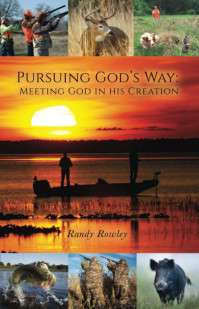
Contact Randy and he’ll mail one to you for $14 (including shipping and the mailer; that’s 2/3 of the Amazon price). Contact Randy for his Venmo, PayPal, and Cash App usernames. You can also mail a check to Randy. Contact him for his address. He’ll also bring books to FCS meetings, so members can save from paying the $4 shipping fee, and will sign them there.
Freshwater Fishing 101 Trips by Randy Rowley
Posted by: | CommentsAs you’ve probably seen, I, Randy Rowley, occasionally send out emails when I have a vacancy(ices) for one of my self-chartered fishing trips. I know that some of you have no experience fishing, but are wanting to learn, and/or have no equipment. Don’t let either of those stop you from RSVPing in the future.
I’ll do my best to teach you the basics – how to operate fishing equipment, knot tying, lure selection, where to throw a lure (and where not to), how to slow down or stop a lure in flight, how to work a lure, how to set the hook, how to fight a fish, and how to land one (and how not to).
I have a plethora of fishing equipment that I’ve collected over the past 48 years, including 22 rod/reels combos (17 baitcasters, four spinning, and a spincast) – I’ll happily loan you one or more. If you have no experience, starting with the spincast combo or one of the spinning combos would be best, as there is a learning curve for baitcasters (they tend to backlash/create a ‘birds nest’ if not set or thrown right). You can even come over and practice throwing practice plugs in my swimming pool. I also have a tackle box that easily weighs as much as a bag of deer corn. In my boat I have three smaller tackle boxes, two large soft plastic bags, and a large spinnerbait box. I’ll happily let you use my lures or terminal tackle.
I’m also very patient and have been told I’m a good teacher. Making errors (e.g., throwing lures into rocks, reeds and trees) and having unfortunate events happen (having lures get stuck in unseen rocks or grass) are part and parcel of fishing – I do it every trip and don’t get mad when my companions do. (To be successful often requires throwing your lure as close to cover (reeds, rocks, trees, docks, etc.) as possible and sometimes we overshoot with our casts – no guts, no glory). As with everything that I do for FCS, I regard these trips as a ministry. What minister gets mad when someone with no Bible knowledge shows up at his church? I also enjoy having kids on my boat (kids ages eight and up usually have the necessary patience for fishing; they do best with spin cast or spinning equipment.) Losing lures to rocks, trees, etc. frequently occurs when fishing, and I don’t get mad when you lose one.
I offer two types of trips – all lures or primarily lures with secondary use of live bait (sometimes) trips and primarily live bait with secondary use of lures (sometimes) trips. If throwing lures intimidates you, sign up for one of the live bait trips – they’re easy fishing.
I have every kind of safety and comfort gear imaginable on my boat, including at least five life jackets, a thrown cushion, three ponchos/raincoats, a large first aid kit, horns, flares, a fire extinguisher, a jump starter, paddles, tools, toilet paper, and the Holy Pee Cup. I also have four fillet knives and cutting boards for cleaning fish afterwards (I’ll happily teach you how to do it) and Ziploc bags to put your fish in. I have a medium-sized ice chest to put your drinks in and storage compartments for things that don’t need to be kept cold.
The sport is called fishing – not catching. I offer no guarantees other than we’ll try our best. If Plan A isn’t working, I’ll abandon it and go to Plan B. Sometimes we do well; other times we don’t, but we always enjoy the beauty of God’s creation and the fellowship.
I don’t make any money on these trips. I assure you that I spend far more on boat maintenance, boat repairs, and insurance than you will on shared gas and ramp fees.
For more information see our Self-chartered Freshwater Fishing Trips web page. If you have any questions, contact me.
The next time that you see I have a vacancy on one of my self-guided trips, sign up! I hope to see you on the water!
Guests’ Articles and Links Submission Policy
Posted by: | CommentsFCS has received several requests from non-FCS members to submit ‘guest articles’ to be posted on our website on topics ranging from air mattresses to wedding dresses. We’ve also received several requests from non-FCS members to post links on our Links page that have nothing to do with what we do – hunt, fish, and/or sports shoot, and/or speak to Christianity.
Web experts say that most such requests are SEO scams or sponsored posts (designed to bring revenue to the requester’s host/client by using other people’s websites to do it). Requesters also can plant hidden back-links, demand unexpected fees, or steal website access.
Our Bylaws state:
III. Membership:
1. A prospective FCS member will receive FCS emails at his or her request or the request of an FCS member on the prospective member’s behalf. Submissions from prospective FCS members (men and women who are not FCS members) will not be posted on the FCS website.
So unless you’re an FCS member, the answer is “No,” automatically. And if you were an FCS member, it wouldn’t be a ‘guest article,’ it would be a ‘member article.’ Articles and links submitted by members must be consistent with what we do – hunt, fish, and/or sports shoot, and/or speak to Christianity, as our Bylaws state:
II. Statement of Purpose:
FCS is a non-denominational, non-political, family-friendly sportsmen’s club founded in Austin, Texas in 1988 by a group of Christian sportsmen. FCS serves the hunting, fishing, and sports shooting worlds by:
- Offering quality and affordable fellowship opportunities for people to experience hunting, fishing, sports shooting, and similar activities in the beauty of God’s creation across the state (but primarily in Central Texas) year-round.
- Encouraging people to establish and maintain a personal relationship with Jesus Christ.
- Encouraging people to serve God and others.
- Encouraging people to fellowship in a local body of Christians that teaches the Bible is the inspired word of God to man.
Here is Membership Information and How to Join FCS.
If you have any questions, contact Randy Rowley, FCS president.
FCS is a small hunting, fishing, and sports shooting club with a very tight budget that focuses largely on Central Texas. We don’t generate revenue, except through membership dues.
If you Google ‘The Fellowship of Christian Sportsmen’ we come up as the first result on Google’s list.
We aren’t interested in beating our competitors. On the contrary, we hope they succeed in bringing more sportsmen into their ranks, as that makes us all stronger.
We aren’t interested in generating much more web traffic than we presently have, and we receive plenty – usually 8,000 hits a week.
Our website primarily exists to convey upcoming events to our members – it does that very well and we have no need for apps, website enhancements (a new website, error/bug fixes, enhancements, website redesign), promotions, website optimization campaigns (SEO), etc.
If you have any questions, contact Randy Rowley, FCS president.
Semi-guided Hog Hunts
Posted by: | CommentsFCS usually goes on a semi-guided hog hunt each year. We have hunted all over the state, except in North Texas and the Panhandle. Here are a few pictures from our most successful hunts:
-
- Christian Bana
-
- Blake Lieb
-
- Scott Timpany
-
- Michael Armstrong
-
- Ted Lieb
-
- Burl Fulenwider
-
- Isaac and Blake Lieb
-
- Art Barrera
-
- Dexter Travis
-
- Jim McGee
-
- Jose Primera
-
- Burl Fulenwider
-
- Jim McGee
-
- Marc Sherrin
-
- Randy Rowley
-
- Rich Beitel, Art Barrera, Jim McGee
-

- David Chalmers with his hog and Randy Rowley’ snakes
-
- David Chalmers
-
- Randy Rowley
Costs:
- Landowner, outfitter, or guide fee (varies per ranch). Landowner, outfitter, guide fees will be required in full by a due date. Hunters who do not pay that fee by the due date will be removed from the list of people who RSVPed for the trip.
- We typically don’t tip for semi-guided hunts where they only show you where the lodging, stands, and cleaning station are and where to dump the guts. However, if they provide more services than that (e.g., cook your meals), then a tip would be warranted.
- Many ranches have lodging (e.g., bunk houses, trailers, etc.); however, if they don’t we’ll secure lodging and spit the fee.
- We’ll carpool when possible and split the vehicle gas. If we take a toll road, because we’re running late, we’ll split that fee.
- We’ll stop for drive-through food on the way to the hunt and will stop for drive-through food on the way home. If the ranch doesn’t supply meals we’ll either cook or eat out. If we cook we’ll split the costs.
What to bring:
- Hunting license if hunting public land.
- Weapon of choice and ammo (note that some ranches limit what weapon and/or ammo you can use and how many shells you can have in your gun). For example, some ranches do not allow buckshot, calibers smaller than .243/6mm, or more than three shells in your gun. Deer rifles and bullets work fine on hogs, but if you have a .243 and a .30-06, take the latter, and if you have 125 and 180-grain bullets, take the latter. A scoped rifle is much better than one with iron sights, a red dot scope, or reflex scope, as it will enable you to hunt at night. Aim at the hog’s head or neck if it’s medium-sized or larger. Don’t aim behind the shoulder of a big hog. A hog’s heart and lungs are between his shoulders. If you shoot behind his shoulder you’re going to hit his liver or gut and you could be in for a very long track. Bring a lot of bullets. Randy Rowley once fired 10 shots during one hog hunt. For most hunts, you’ll be fortunately to fire one or two, but you just never know when you’ll run into an entire herd!
- If we’re able to do a group stalk (we only do them if it’s safe and the ranch allows) you’re welcome to bring a shotgun with either rifled slugs and/or buckshot. Fifteen .33 00 Buck pellets per shot at a running hog means a much better chance of a hit than one slug or rifle bullet per shot. Most manufacturers recommend using a full choke, then modified, then improved cylinder for buckshot. However, this may not be true for your gun so either read your manufacturer’s recommendations or pattern your gun. Don’t shoot buckshot or anything bigger than steel shot BBB or lead 4 shot out of a turkey choke! To do so can ruin the choke, the barrel, and maybe you too (turkey chokes are too constricted to handle anything larger than 4 shot). The best shotgun is a semi-automatic 12 gauge stuffed with 3 1/2″ 000, 00, or 0 Buckshot. If you don’t have a semi-automatic then a pump is the next best thing, followed by a double-barrel. If your shotgun is not chambered for 3 1/2″ then 3″ is then next best thing, followed by 2 3/4″. Some guys alternate rifled slugs and buckshot in their magazines. The idea is the first shot (slug) will be at a standing still pig. If you don’t kill it, you’re follow up shots will be at a running pig, which is where buckshot excels. The best choke to use if you put both buckshot and slugs in your gun (at the same time) is improved cylinder, followed by skeet, and then cylinder. If you are only going to use slugs the best choke is cylinder, then skeet, then improved cylinder and tighter chokes. For recommendations on guns and ammo see Hog Hunting Basics.
- Standard deer hunting gear (binoculars, laser range finder, headlamp or cap light, shooting sticks, etc.).
- A comfy portable (folding) chair for your blind, if the ranch doesn’t supply them.
- A powerful spotlight for night hunting with a green lens. Two hunters can share a light and take turns being the light man and the shooter. If you’re hunting a feeder, constant-on and motion-activated lights excel. See Hog Hunting Basics for recommendations.
- Rubber boots and camo outer hunting clothes (including a face mask or face paint – absolutely essential, unless you’re hunting from an elevated stand). If rain is predicted bring rain gear. A hunter (blaze) orange cap and/or vest for ranches that allow group stalks.
- A Thermacell is highly recommended to repel bugs. Bug sprays are not recommended (hogs will smell bug spray on you and won’t come anywhere near you).
- Food (if more than a day hunt). The Event Coordinator/leader will often buy food for everyone (he also might buy sodas if he can get everyone to agree to which ones to buy). Participants will divide the costs.
- Drinks and snacks (optional; drinks are highly recommended).
- Sleeping bag, pillow, towels, etc. (depending on the accommodations).
- Game cleaning tools (knives, sharpeners, saw, loppers, gambrel, and rope) if the ranch doesn’t have them.
- A large ice chest to take your hog(s) home in. It’s better to have one that is too big than one that is too small.
- Hog bait and corn. Here is Randy Rowley’s hog bait recipe.
- Rods and reels and lures (for ranches that have stocked tanks and allow fishing).
Randy has extras of many of the items that are listed above and will happily loan things if you let him know that you would like to borrow something before you leave. Of course, if you borrow something and break or lose it he will expect reimbursement.
Here is a simplified, and more printer-friendly, Hog Hunting Checklist.
These hunts are a service to FCS members and guests, but the Event Coordinators/leaders will enforce the following expectations:
- Follow the Event Coordinator’s/leader’s instructions, the land owner’s rules, and abide by the FCS Bylaws Regarding Conduct.
- Pay for your share of gas, food (if applicable), and motel rooms (if applicable).
- Pay for items (that are not yours) that you broke or lost.
- Help.
- Show up.
- Be on time.
- Don’t have a pattern of canceling at the last minute.
- Read the Event Coordinator’s/leaders emails and don’t ask questions that have already been answered in the emails (and you would have known the answers for if you had read the emails).
- Return the Event Coordinator’s/leader’s phone calls, emails, and/or texts, if he or she asks a question or asks you to acknowledge something.
RVSP’s are required to Randy Rowley, FCS president. Also, contact Randy if you have any questions.
How to post in Facebook
Posted by: | CommentsFCS has a Facebook group page! Anyone can view the page, like posts, and comment on posts. Group members can add posts with the administrator’s (Randy Rowley) permission. This prevents people from posting about wedding dresses, sports apparel, etc. (which has happened).
The primary benefit of this page is we can engage in discussions much easier than we can on the website on a myriad of topics and it exposes the Club to anyone looking for a hunting, fishing, and clay target shooting club on Facebook. Also, younger people communicate more frequently via Facebook than via website discussion forums.
To post your thoughts, pictures, and videos:
- Go to the FCS Facebook page (you’ll need to log on to Facebook; if you don’t have a Facebook account you’ll need to create one).
- Request to join/become a member. Once approved by Randy, you can post.
- At the middle top, it states “write something” – if all you want to do is write something like, “Does anyone know a good place to hunt for squirrels?” type your question or statement in there and click “Post.”
- In the middle (to the right of “Write Post”) is “Upload Photo / Video” If you want to upload a picture or video, click there. Then click “Upload Photos/Video”. If you’re using your computer you’ll be taken to your hard drive. If you’re using your smartphone you’ll be taken to the App that houses your photos and videos. Select the picture(s)/video(s) that you want to share. You can also say something about the photo(s) or video(s) in the “Say something about your photo” section (above the thumbnail of the picture or video that you selected). Click “Post.”
If you have any questions, contact Randy Rowley, FCS president.
Self-guided Hog Hunts
Posted by: | CommentsNote that we do not currently have a place to hunt on, so these hunts are on hold.
Here are a few pictures from our most successful hunts:
-

- Randy Rowley with his boar
-

- Randy Rowley’s boar
-

- Paul Irwin with his sow
-

- Randy Rowley and his boars
Costs:
- We’ll split the vehicle gas. If we take a toll road, because we’re running late, we’ll split that fee.
- We’ll eat out or get drive-through food.
- Depending on how far we have to travel, we might stay in a motel or camp if it’s not hot.
What to Bring:
- Hunting license if hunting public land.
- Weapon of choice and ammo (note that some ranches limit what weapon and/or ammo you can use and how many shells you can have in your gun). For example, some ranches do not allow buckshot, calibers smaller than .243/6mm, or more than three shells in your gun. Deer rifles and bullets work fine on hogs, but don’t hunt hogs with a caliber smaller than .243 or 6mm. If you have a .243 and a .30-06, take the latter. If you have 150 and 180-grain bullets, take the latter. A scoped rifle is better than one with iron sights, a red dot scope, or reflex scope, as it will enable you to hunt at night. Aim at the hog’s head or neck if it’s medium-sized or larger. Don’t aim behind the shoulder of a big hog. A hog’s heart and lungs are between his shoulders. If you shoot behind his shoulder you’re going to hit his liver or gut and you could be in for a very long track. Bring a lot of bullets. Randy Rowley once fired 10 shots during one hog hunt. For most hunts, you’ll be fortunately to fire one or two, but you just never know when you’ll run into an entire herd! If we’re able to do a group stalk (we only do them if it is safe) you’re welcome to bring a shotgun with either rifled slugs and/or buckshot. Fifteen 00 Buck pellets per shot at a running hog means a much better chance of a hit than one slug or rifle bullet per shot. Most manufacturers recommend using a full choke for buckshot. The next best choice is a modified choke, then improved cylinder. However, this may not be true for your gun so the only way that you can find out what it prefers is to pattern it. Do not shoot buckshot out of a turkey choke! It will ruin it, and maybe you too (turkey chokes are too constricted to handle anything larger than 4 shot. The best shotgun choice is a fast shooting (semi-automatic, pump, or double barrel) 12 gauge with 3 1/2-inch shells (or 3-inch or 2 3/4″ if so chambered) filled with 000, 00, or 0 Buckshot. Some guys alternate rifled slugs and buckshot in their magazines. The idea is the first shot (slug) will be at a standing still pig. If you don’t kill it, you’re follow up shots will be at a running pig, which is where buckshot excels. The best choke to use if you put both buckshot and slugs in your gun (at the same time) is modified. If you are only going to use slugs the best choke is cylinder, then skeet, then improved cylinder and tighter chokes. For recommendations on guns and ammo see Hog Hunting Basics.
- Standard deer hunting gear (knife, binoculars, laser range finder, headlamp or cap light, shooting sticks, etc.).
- A comfy portable (folding) chair for your blind.
- A rechargeable spotlight for night hunting with a green (recommended) lens, 1/2 to two million candlepower (two hunters can share a light and take turns being the light man and the shooter) or a constant-on light if there is a feeder. See Hog Hunting Basics for recommendations.
- Rubber boots and camo outer hunting clothes (including a face mask or face paint – absolutely essential, unless you’re hunting from an elevated stand). If rain is predicted bring rain gear. A hunter (blaze) orange cap and/or vest for ranches that allow group stalks
- A Thermacell is highly recommended to repel bugs. Bug sprays are not recommended (hogs will smell it and won’t come anywhere near you).
- Food (if camping and more than a day hunt). The Event Coordinator/leader will often buy food for everyone (he also might buy sodas if he can get everyone to agree to which ones to buy). Participants will divide the costs.
- Drinks and snacks (optional; drinks are highly recommended).
- Camping gear (if we’re camping) – tent, cot, camp chair, sleeping bag, pillow, lantern, stove, cookware, etc.
- Game cleaning tools (knives, sharpeners, saw, loppers, gambrel, and rope) if the ranch doesn’t have them and if it allows hogs to be cleaned on the ranch.
- A large ice chest to take your hog(s) home in. It’s better to have one that is too big than one that is too small.
- Hog bait and corn. Here is Randy Rowley’s hog bait recipe.
- Rods and reels and lures (for ranches that have stocked tanks and allow fishing).
Here is a simplified, and more printer-friendly, Hog Hunting Checklist.
Randy Rowley has extras of many of the items that are listed above and will happily loan things if you let him know that you would like to borrow something before we leave. Of course, if you borrow something and break or lose it he will expect reimbursement.
Expectations
These hunts are a service to FCS members and guests, but the Event Coordinators/leaders will enforce the following expectations:
- Follow the Event Coordinator’s/leader’s instructions, the land owner’s rules, and abide by the FCS Bylaws Regarding Conduct.
- Pay for your share of gas, food (if applicable), and motel rooms (if applicable).
- Pay for items (that are not yours) that you broke or lost.
- Help.
- Show up.
- Be on time.
- Don’t have a pattern of canceling at the last minute.
- Read the Event Coordinator’s/leaders emails and don’t ask questions that have already been answered in the emails (and you would have known the answers for if you had read the emails).
- Return the Event Coordinator’s/leader’s phone calls, emails, and/or texts, if he or she asks a question or asks you to acknowledge something.
If you have any questions, contact Randy Rowley, FCS president.
FCS Officer Meetings
Posted by: | CommentsFCS has annual officer meetings (for officers and potential officers), usually on a work week evening at different restaurants.
The schedule is per the Agenda.
RSVPs are requested to Randy Rowley, FCS President, to ensure we’ll get a large enough table. Also, let him know if you have any questions.
Guided Upland Bird Hunts
Posted by: | CommentsFCS hunts upland birds with Mike Schumann usually each February or early March at the old Dismukes/Bieberstein Ranch near Dime Box. They have 900 acres of blackland prairie covered with native grass and short brush, post oak savannah with improved pasture, lightly wooded uplands, and heavily wooded bottomlands – an ideal match for upland birds like quail, pheasants, and chukars. Mike’s address is 1011 Cr 453, Dime Box, TX 77853.
We had several highly successful hunts with Mike Schumann. For example, on 2/23/19, eight FCS hunters killed a record 101 birds, including 63 quail, 22 chukars, and 16 pheasants. And here’s a picture from the 3/3/18 hunt.

The hunts start at 9:00 AM and end around 3:00 PM (not counting travel time). As with all ranches in Central Texas, these will be pen raised birds. The hunts includes:
- Kids (15 years old & under) hunt FREE with paid adults
- FREE shooting lessons
- Sporting clays and bird processing included (lunch not included)
- Hunting dogs will be provided (if you would like to bring your well-trained (for upland bird hunting) and well-mannered dog, you can if that is OK with the other hunters in your group, but only one or two dogs can come)
These hunts require up to four hours of walking while carrying a shotgun, ammo, drinks, dead birds (if the guide’s bag is full), etc. Being able to quickly get to a dog that is on point is essential for success, as upland game birds will sometimes run when they detect the dogs. Consequently, these hunts are not recommended for hunters who aren’t able to get to a dog that is on point quickly.
The Event Hierarchy applies. We can usually take up to 12 hunters (three groups of four hunters).
Package options include:
- 18 quail
- 9 chukars
- 6 pheasants
- A mix of 6 quail, 3 chukars, and 2 pheasants (a full mixed bag)
- A mix of 9 quail and 4 chukars
- A mix of 4 chukars and 3 pheasants
- A mix of 9 quail and 3 pheasants
Hunters in each group will need to hunt the same packages. Mike assigns three – five hunters per guide. He doesn’t have enough guides for one guy to hunt 18 quail by himself, while another hunts nine chukars by himself, and another hunts six pheasants by himself. If he did, then the cost per hunt (essentially having a 1:1 guide) would be triple his normal rates.
This is not a shopping trip! The birds that you order will be put in the field, but there is no guarantee that you’ll harvest them. Harvested birds will be divided equally or proportionally by the guides.
Costs:
- The guide fees are $275 on weekdays and $300 on weekends. A $100 deposit will be required by a due date. Mike accepts PayPal and checks. Hunters who do not pay the guide fee by the due date will be removed from the list of people who RSVPed for the trip. We recommend a 20% tip ($55 on weekdays and $60 on weekends), based on the effort, not the results.
- We’ll split the vehicle gas. If we take a toll road, because we’re running late, we’ll split that fee.
- We’ll eat out or get drive-through food.
What to Bring:
- Texas Hunting license and upland game bird endorsement. If you bought a super combo license it includes your hunting license and upland bird endorsement.
- Shotgun. A 12 gauge piston-operated semi-automatic with a 2 3/4-inch or 3-inch chamber is recommended. A plug is NOT required for semi-automatics and pumps capable of holding more than two shells in the magazine while hunting upland game birds. A 20 gauge is also a good choice and only has 12 1/2% less payload (per equivalent shell) when compared to a 12 gauge.
- Four boxes of Remington Shur Shot Heavy Dove Loads or equivalent in 8 shot for clay targets, 7 1/2 shot for quail and chukars, and 6 shot for pheasants. Randy Rowley recommend a box of 8 shot, two boxes of 7 1/2 shot, and a box of 6 shot for a full mixed bag, although you’ll probably shoot less than 10 target loads, less than two boxes of 7 1/2 shot, and less than five 6 shot shells. For example, on the 3/7/26 hunt, Randy shot five target shells, 31 7 1/2 shot shells, and one 6 shot shell, for a total of 37 shells.
- Blaze orange cap and hunting vest and clothing appropriate for the season. You never know when it will rain, so bring rain gear.
- Shooting glasses or sunglasses.
- Drinks and snacks (optional; drinks are highly recommended).
- A medium-sized ice chest or bag to take your birds home in.
Expectations:
These hunts are a service to FCS members and guests, but the Event Coordinators/leaders will enforce the following expectations:
- Follow the guide’s instructions and abide by the FCS Bylaws Regarding Conduct.
- Pay for your share of vehicle gas.
- Help when the guide asks you to.
- Control your dog (if you brought one).
- Talk quietly (upland birds can hear you and can run away from the noise).
- Show up.
- Be on time.
- Don’t have a pattern of canceling at the last minute.
- Read the Event Coordinator’s/leaders emails and don’t ask questions that have already been answered in the emails (and you would have known the answers for if you had read the emails).
- Return the Event Coordinator’s/leader’s phone calls, emails, and/or texts, if he or she asks a question or asks you to acknowledge something.
RSVPs are required to Randy Rowley, FCS president. Also contact Randy if you have any questions.
Unsubscribe Options
Posted by: | CommentsPlease do not follow Google’s instructions on unsubscribing from a Google Group (distribution list), as you will be emailing the entire Google Group instead of just Randy Rowley. Instead:
- Reply to one of Randy’s emails and change the subject line to “Unsubscribe.”
- Reply to one of Randy’s emails and type “Unsubscribe” in your reply message.
- Send a new email to Randy with “Unsubscribe” in the subject line.
FCS Sporting Clays Shoots/FCS Opens
Posted by: | CommentsFCS hosts sporting clays shoot on even months from 9:00 – 11:30 AM at Capital City Clays. Sporting Clays and 5-stand more closely mimic actual hunting situations than any other clays games, but sporting clays makes better use of terrain and has around twice as many traps than 5-stand does. We’ll shoot a round of 50 sporting clays on their red course (formerly called the corporate or hunter course), which has covered stations.
The FCS Opens happens each spring and fall. Participants will shoot two rounds of sporting clays (the red course and the harder blue or white courses), then eat lunch at an area restaurant (lately we’ve been going to Maxine’s Gumbo House in Manor). The FCS Open goes from 9:00 AM – 3:00 PM.
Here are a couple of pictures from Maxine’s.
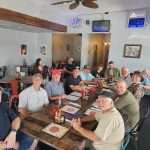
If a station has multiple trap options, please shoot the first option on the station’s red card for the first pair, shoot the second option for the second pair, and shoot the third option for the final pair. This gives you a mix of report pairs and true pairs. Or you can shoot all singles, all report pairs, all true pairs, or a mixture of them. We recommend that new shooters start out with singles (with the easier one first – then, after they break that one, introduce the harder one), then after they get the hang of it graduate to report pairs, then graduate to true pairs. We keep score just for fun. RSVPs aren’t required.
Below are some pictures from recent shoots:
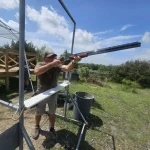
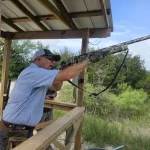
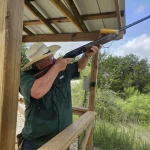
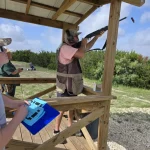
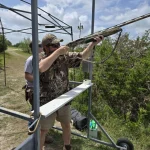
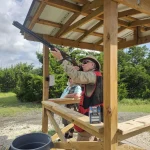
FCS Sporting Clays Schedule:
- 9:00 AM – arrive
- 9:15 AM – shoot sporting clays
- 11:15 AM – announce scores, upcoming events discussion, and possibly a short devotional
- 11:30 AM – depart
FCS Open Schedule:
- 9:00 AM – arrive
- 9:15 AM – shoot sporting clays
- 1:15 PM – eat, announce scores, and upcoming events discussion
- 3:00 PM – depart
Who should attend: Members and guests, including ladies and youth, and? all levels of shooters? (including new ones). We average nine participants, so we break up into groups. We recommend shooters be at least 10 years old. For youths, we suggest a 20 gauge that fits the child (if a youth shoots a .410 or a 28 gauge, he or she will probably miss a lot and get discouraged). We delight in teaching others but aren’t sporting clays instructors.
Cost and what to bring:
- A round of 50 clays costs $25.98/shooter (including tax).
- A shotgun is needed (of course). Most shooters use a 12 gauge, but a 20 gauge is fine (for target, game, and field loads, their payload is only 12 1/2% less than a 12 gauge per shell). If you don’t have a shotgun some of us will be happy to share our gun with you. Most of the targets on Capital City Clays’ red course are close enough for skeet chokes, but IC works fine.
- You’ll need to bring at least two boxes of target, game?, or field loads (at least four boxes for the FCS Opens). A few extra shells are recommended in case you have any misfires or need to reshoot a station because a second clay broke in flight before you had a chance to shoot it (in such cases we shoot both targets again, but the result of the first shot counts). Capital City Clays sells shotgun shells if you need them (but you can get them cheaper at Academy, Walmart, etc.). We recommend Winchester Upland Game Loads, Remington Gun Club Target Loads, Federal Top Gun Loads, Estate Super Sport Competition Loads, Rio Target Loads, Estate Game and Target Loads, Remington Sure Shot Heavy Dove Loads, Winchester Heavy Game Loads, and Federal Game Loads. They are usually available at Academy, Bass Pro Shops, Walmart, etc. 1-1/8 oz. or 1 oz. loads (for 12 gauge), 1200-1325 FPS, and 7-1/2 shot are preferred (8 shot works almost as well). They sell for $11 – $13.00/box. All are good dove/quail/clay target loads. If you’re a dove/quail hunter, we recommend that you shoot sporting clays with the same load that you use to hunt dove/quail. This enables you to develop consistent leads for similarly sized targets.
- You’ll need a shooting vest, shell pouch, or bag (preferably a shooting bag) to hold your shells.
- Capital City Clays requires eyes and ears protection. Shooting glasses or sunglasses and earmuffs or ear plugs are recommended. You can bring your own or foam ear plugs and clear safety glasses are available at no charge at their clubhouse. Please return borrowed safety glasses.
- A cap and sunscreen are recommended.
- Capital City Clays has small water bottles, usually cold, at most stations.
Location and phone number: 8707 Lindell Lane (near the Travis County Exposition Center and Lake Decker). If you get lost, their phone number is 512-272-4707.
In the event of rain: Light rain – we’ll shoot; heavy rain – we’ll stay home, and I’ll send out a cancellation email.
Questions: Contact Brad Verste
FCS Meetings (Social Activities)
Posted by: | CommentsFCS has bi-monthly meetings (social activities), usually on even months. The meetings feature cooking (usually) and eating dinner, an upcoming events discussion, a devotional, and a DVD (if there’s time). The cost ranges between $5 – $22/person (depending on how much was spent on food).
Schedule:
- 7:00 PM – cook, fellowship, and eat dinner
- 8:00 PM – upcoming events discussion and devotional
- 8:45 PM – watch a hunting, fishing, or sports shooting DVD
- 9:30 PM – depart
RSVP’s are required to Randy Rowley, FCS President, (to ensure that we’ll have enough food). Also, let him know if you have any questions.
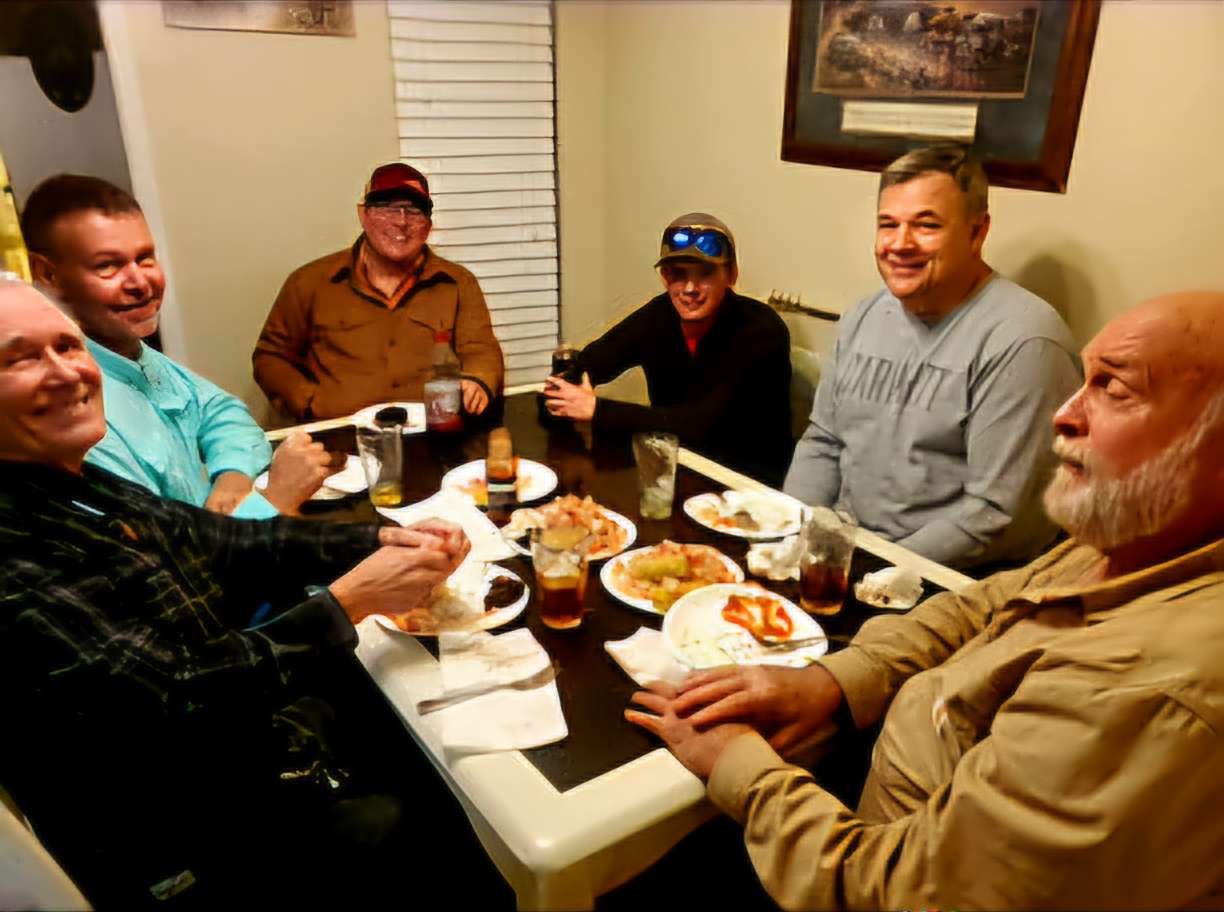
Participants
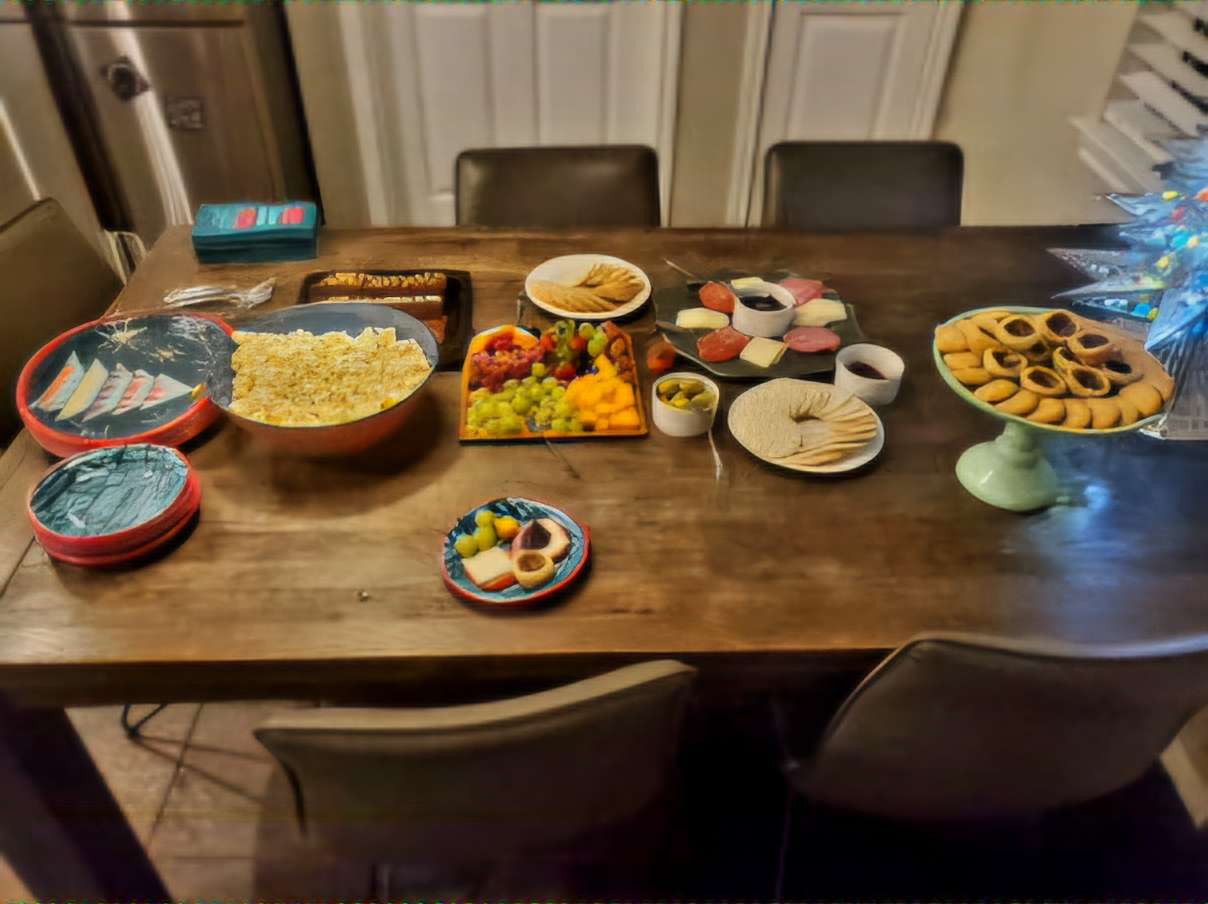
Appetizer spread

Randy presenting a devotional
Events Policies
Posted by: | CommentsThe below links provide information on some of our most important events policies:
An Incentive for Ministry Events Participation
How to Pay for Some Events and Some Lodging Fees in Full
Paying Landowner, Outfitter, or Guide Fees and Some Lodging Fees in Full
Sharing Fish and Game at FCS Chartered Fishing Trips and Guided Duck and Upland Bird Hunts
What is the Difference Between a Self-guided/chartered, Semi-guided, and a Guided/Chartered Event
Who is Considered an Adult at FCS Events
If you have any questions contact Randy Rowley, FCS president.
Becoming a Registered User Policy
Posted by: | CommentsThe benefit of becoming a registered user on this website is to see web pages that are password protected, such as our Membership Directory. The Registered Users section is mostly for website administrators/managers to create, revise, or delete posts. If you wish to have something considered for posting or as a reply to a post, contact Randy Rowley, FCS President.
How do I get added to the FCS email distribution list?
Posted by: | CommentsSimply ask Randy Rowley to add you. You can unsubscribe at any time.
Shotgun Shooting 101 Events by Randy Rowley
Posted by: | CommentsAs you might have seen, we send out monthly emails about our sporting clays shoots at Capital City Clays. We know that some of you have no experience shooting shotguns at moving targets, but are wanting to learn, and/or don’t have the necessary equipment (e.g., a shotgun). Don’t let either of those stop you from coming to our shoots.
Our leaders will pair you with experienced shooters who will do their best to teach you the basics of using one of their shotguns – holding, loading, stance, balance, swing, lead, and follow-through. We’re very patient and are good teachers.
The sport is called sporting clays – not breaking clays. We offer no guarantees other than we’ll try our best to get you breaking targets.
For more information, see our FCS Sporting Clays Shoots/FCS Open web page. If you have any questions contact Randy Rowley, FCS president.
We hope to see you at Capital City Clays!
Chartered Freshwater Fishing Trips
Posted by: | CommentsFCS has at least an annual chartered hybrid/striped bass fishing trip usually on weekday afternoons, in the spring, summer or fall. The most that we have taken is sixteen participants, which required three guides/boats. In addition to catching hybrid/striped bass, we have caught white bass, largemouth bass, catfish, crappie, and gasper goo (freshwater drum).
Striped bass grow larger than hybrid striped bass. For both species, the minimum length is 18″ and the limit is five. If you catch white bass the minimum limit is 10” and the daily bag limit is 25.
We also have an annual chartered white bass (catch and release only) fishing trip usually on a weekday morning each spring. The most that we have taken is five participants.
We have also had chartered fishing trips targeting crappie and largemouth bass. At least the crappie trip will become an annual event.
We’ve fished on Lakes Austin, Belton, Bastrop, Buchanan, Fayette, Granger, LBJ, and Ray Roberts.
Here are pictures from some of our chartered freshwater fishing trips:
-

- Jim McGee
-
- 6/16/24 hybrid and striped bass, a catfish, and a gasper goo
-

- 10/9/23 hybrid, striped, and white bass fishermen
-

- 5/12/16 hybrid and striped bass fishermen
-

- 6/25/13 hybrid bass fishermen
-

- 5/7/07 hybrid bass fishermen
-

- 10/9/23 catch
-

- 6/5/23 white bass fishermen – they caught a record 204 white bass
-

- Bill Atkinson
-

- Zack Tumlinson
-

- Randy Rowley
-

- 3/22/22 crappie fishermen
-

- Kevin McConnell
-
- Ryan Rowley
-
- Hunter Rowley
For the chartered hybrid/striped bass fishing trips, if we have nine fishermen on a boat the cost is between $158 per person. The guide(s) will supply the boat, rods, bait, landing nets, and a fish box. They’ll clean the fish and bag them. The price does not include shared gas, eating out, and an optional (but highly recommended) tip. A 20% tip would be $32 for a $158 trip.
What to Bring
- Freshwater fishing license.
- Clothing appropriate for the season (including a cap). You never know when it will rain, so bring rain gear.
- Drinks and snacks (optional; drinks are highly recommended). There are storage compartments in the boats to put your drinks and snacks in.
- Sunglasses (optional, but highly recommended).
- Bug repellent (optional).
- A medium-sized hard or soft ice chest to take your fish home in (if you get any; leave it in your vehicle).
The captains are required to have a life jacket for every passenger, so you won’t need one. Don’t bring your own tackle. For the hybrid/striped bass and crappie fishing trips, the captains will fillet the fish (with the exceptions of the catch and release only trips) and put them in Ziploc bags, so you won’t need to bring a fillet knife, knife sharpener, fillet board, or Ziploc bags.
Expectations
These fishing trips are a service to FCS members and guests, but the Event Coordinators/leaders will enforce the following expectations:
- Follow the captain’s instructions and abide by the FCS Bylaws Regarding Conduct.
- Pay for your share of vehicle gas.
- Help when the captain asks you to.
- Talk quietly – fish can hear you also and will swim away.
- Show up.
- Be on time.
- Don’t have a pattern of canceling at the last minute.
- Don’t ask questions regarding information that has already been conveyed in the Event Coordinator’s/leaders emails (and you would have known the answers if you had read the emails).
- Return the Event Coordinator’s/leader’s emails, phone calls, and/or texts, if he or she asks a question or asks you to acknowledge something.
RSVPs’ and payment in full or a deposit (depending on the guide) are required to Randy Rowley. Also contact Randy if you have any questions.
FCS invites articles, classified ads, hunting and fishing stories, members’ profiles, product and service reviews and recommendations, and safety tips from supporting FCS members. We invite devotionals, praises, and prayer requests submissions from all FCS members. We reserve the right to edit and refuse to post material. Submissions from prospective FCS members (men and women who are not FCS members) will not be posted on the FCS website.
FCS can only use original submissions unless the author’s work is not copyrighted. No material on our website may be reproduced in print or electronically without Randy Rowley’s written or electronic permission. FCS members can email their requests/documents to Randy. For classified ads, include a lot of details and submit pictures (a picture is worth a thousand words). Please research your used item on https://www.ebay.com/ or http://austin.craigslist.org/ (for general items) and www.gunbroker.com, www.gunsamerican.com, or www.texasguntrader.com (for guns and accessories) and find out what the going rate is.
Self-guided Duck/Teal Hunts
Posted by: | CommentsFor the 2025 – 2026 season, we hosted hunts at the Guadalupe Delta Wildlife Management Area (WMA) near Tivoli, the Richland Creek WMA (Carl Fentress Unit) near Streetman, and the Mad Island WMA near Collegeport. These hunts required the Annual Public Hunting Permit and involved extensive walking and wading, often on mucky bottoms. We also hunted on Lakes Stillhouse Hollow and Granger, the DeLoach Ranch’s lake near Taylor, and Corpus Christi Bay.
For many years, Randy Rowley has hosted self-guided duck/teal hunts on central Texas lakes, within 100 miles of Austin. Randy has a full-time job, isn’t a guide, hunts on weekends or state of Texas holidays (usually), and hunts on highly pressured lakes in an area of Texas near where he lives (Leander) that isn’t known for great duck hunting. Results have usually been far from great on the lakes, especially since the 2015/2016 season, except for one teal hunt on a lake. Here is our scorecard to date:
| Season | Number of Ducks Bagged | Number of Hunts | Number of Hunters | Average Number of Hunters Per Hunt | Average Number of Ducks Per Hunt | Average Number of Ducks Per Hunter |
| 2025/2026 | 68 * (10 on lakes, 57 on ponds, and 1 on a bay) | 17 * | 45 * | 2.65 | 4.00 | 1.51 * |
| 2024/2025 | 29 (2 on lakes and 27 on ponds) | 8 | 34 | 4.25 * | 3.63 | 0.85 |
| 2023/2024 | 39 (22 on lakes and 17 on a pond) | 7 | 26 | 3.71 | 5.57 * | 1.50 |
| 2022/2023 | 6 (3 on lakes and 3 on ponds) | 6 | 16 | 2.67 | 1.00 | 0.38 |
| 2021/2022 | 5 (3 on a lake and 2 on a pond) | 5 | 20 | 4.00 | 1.00 | 0.25 |
| 2020/2021 | 1 on a lake | 5 | 20 | 4.00 | 0.20 | 0.05 |
| 2019/2020 | 51 (7 on lakes and 44 on a pond) | 12 | 45 * | 3.75 | 4.25 | 1.13 |
| 2018/2019 | 5 on ponds | 5 | 20 | 4.00 | 1.00 | 0.25 |
| 2017/2018 | 8 on a lake | 6 | 18 | 3.00 | 1.33 | 0.44 |
| 2016/2017 | 0 | 6 | 24 | 4.00 | 0.00 | 0.00 |
| 2015/2016 | 9 on lakes | 5 | 15 | 3.00 | 1.80 | 0.60 |
| 2014/2015 | 10 (4 on lakes and 6 on a pond) | 8 | 28 | 3.50 | 1.25 | 0.36 |
| 2013/2014 | 12 on lakes | 6 | 18 | 3.00 | 2.00 | 0.67 |
| 2012/2013 | 15 on lakes | 6 | 19 | 3.40 | 3.20 | 0.94 |
| 2011/2012 | 16 on lakes | 5 | 17 | 3.40 | 3.20 | 0.94 |
| Total | 274 (112 on lakes, 161 on ponds, and 1 on a bay) | 107 (average of 7.13 hunts/ season) | 365 (average of 24.33 hunters/ season) | 3.41 | 2.56 | 0.75 |
* = record
Some of our successes include:
-
- Clayton Carrier, Randy Rowley, and Jeff Morris
-
- Randy Rowley, Mike Pozhenko, and Clayton Carrier
-
- Clayton Carrier, Jeff Morris, Mike Pozenko, Tony Pataky, and Randy Rowley
-

- Ragan Brock, Mike Walsh, Jonathan Fleming, and Randy Rowley
-

- Tim Price and Randy Rowley
-
- Randy Rowley, Ryan Rowley, and Binh Chu
-
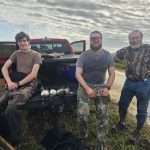
- Isaac, Daniel, and Don Hebert
-

- Chris Campbell, Randy Rowley, and Burl Fulenwider
-
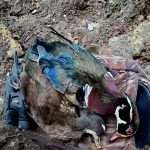
- Randy Rowley’s wood ducks
Randy has taken up to three adult hunters (four including him) on Cam (his 2019 bay boat – a 20-foot 3-inch camo Excel Bay Pro 203 with a 115 HP Yamaha motor) (see below).
It has a camo Beavertail blind that sits on top (see below).

Here is Randy’s first motor boat, Bob, all brushed out (below the hunter’s head). However, as hunters usually don’t want to leave an hour earlier than they normally do (2:00 – 3:00 AM), they rarely brush out Cam.

For walk-in hunts, three FCS members own jet sleds that enable them to drag their equipment on the land or in the water.
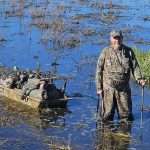
Our duck and teal hunts usually require wading in water at night, with only a cap light or head lamp for illumination. They also require putting out and picking up decoys and retrieving dead ducks. Hunters sometimes get stuck in muddy lake/river/pond bottoms and trip over stumps, roots, and logs. Being able to get yourself unstuck if stuck in the mud and back on your feet if you’ve fallen is essential. Consequently, these hunts are not recommended for hunters who have difficulty freeing themselves from the mud or getting back up if they’ve fallen.
A law was enacted in 2022 that requires hunters to either on-sight register or electronic on-sight register (if available) upon arrival and departure from a TPWD public hunting area. The signage at least on Lake Granger is inadequate to explain to hunters what they must do. It simply states, “E and the unit number” (such as E285). Game wardens are ticketing hunters who don’t on-sight register or electronic on-sight register upon arrival and departure at Lake Granger.
FCS hunters have hunted Lakes Granger, Stillhouse Hollow (aka Stillhouse), Somerville, or Waco in their WMAs. Lake Belton was Randy’s last choice as they’ve hunted it seven times (three times in the Owl Creek WMA, twice in the Iron Bridge WMA, once in the White Flint WMA, and once from the shores of Fort Hood) and only fired shots on the Fort Hood hunt. They also didn’t see hardly any ducks in the WMAs. In order to hunt the Iron Bridge WMA successfully, hunters need a flat bottom or airboat, which Randy doesn’t have, to get up the usually shallow Leon River.
All five lakes are administered by the U.S. Army Corps of Engineers (USACE). Hunters usually hunt until 8:30 – 10:30 AM, depending on how the ducks are flying and the weather conditions (ducks often fly longer when it is overcast). All USACE developed parks require parking permits (pay at the gate). Undeveloped parks do not require parking permits.
FCS hunters haven’t hunted Lake Georgetown. The USACE requires a Small Game Permit to hunt waterfowl and the Lake Georgetown Project Office will only issue 50 small game permits issued each season. Small game permits will be administered through an application and a random drawing process, and there is a $25 application fee.
Our best hunts have been on Lakes Granger and Stillhouse, so they’re tied for Randy’s first choice. Lake Somerville is his third choice.
Lake Granger doesn’t require a USACE lake hunting permit. However, the Texas Parks and Wildlife Department (TPWD) leases Lake Granger’s WMA’s; consequently, a TPWD annual public hunting permit is required. The cost is $48/year. If hunters decide to hunt Lake Granger they will hunt in the San Gabriel, Willis Creek, or Sore Finger WMA’s. Wilson Fox Park on Granger is 38 miles from Randy’s house.
Lakes Stillhouse and Waco do not require a TPWD annual Public hunting permit nor a USACE lake hunting permit (see https://www.swf-wc.usace.army.mil/lake/SWF%20District%20Hunting%20Guide%202024-2025.pdf).
When Randy hunted Lake Stillhouse they’ll launch at Riversbend Park (50 miles from his house) and hunt in the Union Grove WMA on the island (the side depends on the direction of the wind) or in a small cove. Or they’ll launch at Cedar Gap Park and hunt in the Gravel Crossing or Twin Creek WMA’s, up the Lampasas River, but that area isn’t very wide so Randy usually doesn’t hunt it.
Lake Somerville doesn’t require a USACE lake hunting permit. However, hunters will need a TPWD annual public hunting permit if they hunt in Flagg Pond in the TPWD day hunt area. They must use Cam to get to where they’ll hunt (but don’t have to hunt from him) and ensure that their shot will not fall onto Nails Creek property. The USACE day hunt area doesn’t require a TPWD annual public hunting permit, although they can only hunt from the shore in that area (they can’t hunt from Cam), so it’s Randy’s last choice. Lake Somerville is 62 miles further than Granger (103 miles from Randy’s house), so they’ll have to leave an hour earlier than they would if they were going to hunt Lake Granger. They’ve only had one good hunt on Lake Somerville, so it was Randy’s next to last choice.
If FCS hunters ever hunt Lake Waco they’ll” hunt either in the Flat Rock hunting area or in the South Waco hunting area. Depending on where they hunt, Waco is 56 miles further than Lake Granger (97 miles from Randy’s house), so they’ll have to leave an hour earlier than they would if they were going to hunt Lake Granger. Note that all hunters who hunt on Lake Waco must sign a Disclaimer and Waiver of Liability and have it in their possession while hunting. Also, duck hunters on Lake Waco must wear at least 400 square inches of hunter orange material (144 square inches on both chest and back) and some type of orange headwear when leaving their hunting destinations. In addition, no hunting is permitted around Waco Wetlands. Randy has yet to hunt Lake Waco, so the jury is still out on it.
Where they hunted depended on lake levels and hunting reports that Randy receives from various sources.
Costs:
- The participants (excluding Randy, if Cam is being used) will split the vehicle and boat gas (the amount depends on the distance traveled and the number of people sharing the gas), boat launch fees (if applicable; no more than $5 each), and toll road fees (if they take any). Randy has to replace Cam’s starter batteries, trailer tires and wheel bearings, etc. more quickly due to taking FCS members and guests on duck hunts than he would if he didn’t take FCS members and guests on such trips; therefore, he’s exempt from the above expenses. If you look at what he spends on the above, he guarantees you that he’s not making any money on these trips. If they’re not using Cam, Randy will join the other participants on splitting the vehicle gas and toll road feeds (if they take any).
- They’ll stop at Whataburger on the way to the lake and might stop for second breakfast or brunch on the way home.
- There is a shared boat launch or state or county park fee, in most cases.
What to Bring:
- Texas hunting license and migratory bird endorsement and federal duck stamp. If you bought a super combo license it includes your hunting license and migratory bird endorsement but does not include a federal duck stamp.
- Shotgun. A 12 gauge piston-operated semi-automatic is recommended (but keep them clean, as if they get gunked up they’ll stop working). A recoil (aka inertia)-operated semi-automatic takes second place (as they kick more than piston-operated semi-automatics), followed by a pump (or slide)-action. A plug is required for semi-automatics and pumps capable of holding more than two shells in the magazine (almost all of them are) while hunting migratory game birds.
- Camo or dull non-cloth shotgun case. If hunting from Cam, a floating case is recommended. If your case is bright you’ll need to hide it well if hunting on land.
- Two boxes of steel shot (Winchester Xpert/Remington Sportsman/Federal Waterfowl/Kent FASTEEL Loads steel shot or HEVI-Steel shotgun shells, for three-inch chambers (if your gun is also chambered for three inches), in 2, 3, or 4 shot. Get the 1300 – 1500 FPS variants with 1 1/4 oz. of shot (in 12 gauge), as you’ll have more shot and you’ll have a better pattern. 10 gauges and 3 1/2? shells in 3 1/2 inch-chambered 12 gauges are overkill for ducks. Steel shot (if of adequate size) will kill ducks – there is no need for HEVI-shot, Tungsten, Bismuth, etc. You’ll pay a lot more for those shells and they aren’t needed. You’ll not need more than two boxes and will probably shoot less than that. Several times hunters haven’t shot at all.
- Camo or dull blind bag, shell bag, vest, or bandoleer. If hunting from Cam, a floating blind bag is recommended. If hunting from land and your shell bag is bright (e.g., a red HEB shopping bag) you’ll need to hide it well.
- Headlamp or cap light (waterproof is recommended).
- Camo outer hunting clothes, including cap/hat and a face mask or face paint (face coverings are absolutely essential as oily skin glows in a duck’s eyes). As you never know when it will rain, bring rain gear.
- Waders (absolutely essential). Uninsulated breathable waders are recommended for warmer hunts. Neoprene breathable waders are recommended for colder hunts (if you wear 5mm thick neoprene waders on a September teal hunt you might cook yourself). Hunters don’t put their waders on until they reach the lake (unless they have uninsulated breathable waders).
- If hunters hunt from Cam, they’ll not need a bucket, stool, or chair, as Cam has fishing chairs and benches. However, if they have to hunt from shore (because the cover is too far from shore and Cam will stick out like a sore thumb) they’ll use Cam to ferry them to where they’ll hunt, beach him 100 or so yards away, and sit in the cover. In which case you’ll need a bucket, stool, or chair.
- Ear plugs or muffs (electronic ones allow you to hold normal conversations).
- Non-mirrored shooting glasses or sunglasses (optional).
- Drinks and snacks (optional; drinks are highly recommended). There are storage compartments in Cam to put drinks and snacks in.
- Bug repellent (optional, but recommended).
- Game shears (optional), small fillet knife, a gallon-sized Ziploc bag, and a small hard or soft ice chest to take your ducks home in, if you get any.
Randy has seven life jackets and three ponchos in Cam, so you won’t need either one. However, you can bring your own if you want to.
Randy has extras of many of the items that are listed above (such as waders, floating shotgun cases, stools, small and medium-sized ice chests, headlamps, etc.) and will happily loan things if you let him know that you would like to borrow something before they leave. Of course, if you borrow something and break or lose it Randy will expect reimbursement. He’ll also expect reimbursement if hunters shoot his decoys and they’re damaged beyond repair or if his motorized duck is submerged while in their care (water will fry its motor).
Here are examples of sitting in cover (three of the pictures include a mesh blind):


Randy usually starts out with a improved cylinder waterfowl choke if the ducks are coming into the decoys. If all he’s getting are shots as they fly past (pass shooting), he’ll switch to a modified or full waterfowl choke. Clay target chokes sometimes shoot tighter with non-lead (e.g., steel) shot (e.g., a modified choke will often perform as a full choke with non-lead shot). A choke that delivers that performance should say that on the choke.
Randy has 111 decoys (32 mallards (including 28 decoys, two quiver ducks, a swimming duck, and a wind-activated duck that he only uses when it’s windy enough to spin its wings), 26 pintails, 16 redheads, 13 teal (including a motorized teal), 11 gadwalls, six canvasbacks, six buffleheads, and a widgeon; however, he’ll only bring decoys for the types of ducks found on the lake that they’re going to. For example, he’s never seen canvasbacks or buffleheads on Lakes Somerville or Granger, so those decoys will stay in his garage when they hunt there. He’ll bring between 60 – 72 decoys to the lakes, due to Cam’s space limitations. For ponds, when there is a pond that they can hunt on, he’ll just bring 12 to 24 decoys (depending on the size of the pond).
Expectations
These hunts are a service to FCS members and guests, but Randy will enforce the below expectations:
- Follow his instructions and abide by the FCS Bylaws Regarding Conduct.
- Pay for your share of truck and boat gas and and park entrance fees/boat launch fees.
- Pay for items (that are not yours) that you broke or lost (including decoys that you shot and sank).
- Help (including helping get Cam back on his trailer).
- Control your dog (a dog that wants to go play with the decoys or charge the ducks as they are coming in will ruin the hunt).
- Talk quietly, especially when ducks are coming into the decoys (ducks can hear you and will veer away).
- Show up.
- Be on time.
- Don’t have a pattern of canceling at the last minute.
- Read Randy’s emails and don’t ask questions that have already been answered in the emails (and you would’ve known the answers to if you had read the emails).
- Return Randy’s phone calls and/or emails, if he asks you a question or asks you to acknowledge something.
For WMA and coastal hunts, contact Clayton Carrier if you have any questions.
For lake hunts, contact Randy if you have any questions.
Guided Waterfowl Hunts
Posted by: | CommentsFCS goes on at least one guided waterfowl hunt per season. We usually hunt ducks but have also hunted geese and sandhill cranes.
We have had hunts with Ricky Ethridge (near Donie, Marquis, Cameron, and Lockhart), Rayce Jenkins (near El Campo), Bret Jepsen (near DFW), Jack Chamberland (near McMahan), and Matt Strayer (near Altair). Our most successful hunts have been with Rayce, Bret, and Ricky. Our most inexpensive hunts have been with Ricky, but he no longer guides in Texas (he guides in Mexico).
We have gotten our limits several times. Here are pictures of some of our successes:


Note that these hunts usually require wading in water at night, with only a cap light or head lamp for illumination, while carrying a shotgun, ammo, drinks, etc. Hunters sometimes get stuck in muddy lake/river/pond bottoms and trip over stumps and logs. Being able to get yourself unstuck if stuck in the mud and back on your feet if you’ve fallen is essential. Consequently, these hunts are not recommended for hunters who have difficulty freeing themselves from the mud or getting back up if they’ve fallen.
Costs:
- Guide fees run between $150 – $250. Guide fees will be required in full by a due date. Hunters who do not pay the guide fee by the due date will be removed from the list of people who RSVPed for the trip. We recommend a 20% tip, based on the effort, not the results.
- We’ll split the vehicle gas. If we take a toll road, because we’re running late, we’ll split that fee.
- We’ll eat out or get drive-through food.
- Depending on how far we have to travel, we might stay in a motel.
- Most guides clean the birds for you. If they do not offer this service, that will be stated in the information about the hunt.
What to Bring:
- Texas hunting license and migratory bird endorsement and federal duck stamp. If you bought a super combo license it includes your hunting license and migratory bird endorsement but does not include a federal duck stamp.
- Shotgun. A 12 gauge piston-operated semi-automatic is recommended (but keep them clean, as if they get gunked up they’ll stop working). A recoil (aka inertia)-operated semi-automatic takes second place (as they kick more than piston-operated semi-automatics), followed by a pump (or slide)-action. A plug is required for semi-automatics and pumps capable of holding more than two shells in the magazine (almost all of them are) while hunting migratory game birds.
- Camo or dull non-cloth shotgun case, as cases during waterfowl hunts tend to get muddy. We’ll leave the cases in the bed of the guide’s truck. If we’re going to be hunting from a boat a floating case is recommended.
- Two boxes of steel shot (Winchester Xpert/Remington Sportsman/Federal Waterfowl/Kent FASTEEL Loads steel shot or HEVI-Steel shotgun shells, for three-inch chambers (if your gun is also chambered for three inches), in 2, 3, or 4 shot. Get the 1300 – 1500 FPS variants with 1 1/4 oz. of shot (in 12 gauge), as you’ll have more shot and you’ll have a better pattern. 10 gauges and 3 1/2? shells in 3 1/2 inch-chambered 12 gauges are overkill for ducks. Steel shot (if of adequate size) will kill ducks – there is no need for HEVI-shot, Tungsten, Bismuth, etc. You’ll pay a lot more for those shells and they aren’t needed.
- Camo or dull blind bag, shell bag, vest, or bandoleer. If your shell bag is bright (e.g., a red HEB shopping bag) you’ll need to hide it well. If we’re going to be hunting from a boat a floating blind bag is recommended.
- Headlamp or cap light (waterproof is recommended).
- Camo outer hunting clothes, including cap/hat and a face mask or face paint (face coverings are absolutely essential as oily skin glows in a duck’s eyes). You never know when it will rain, so bring rain gear.
- Waders (absolutely essential except on the pond hunts). Uninsulated breathable waders are recommended for warmer hunts. Neoprene breathable waders are recommended for colder hunts (if you wear 5mm thick neoprene waders on a September teal hunt you might cook yourself). We don’t put our waders on until we reach the pond, lake, or river (unless you have uninsulated breathable waders). If we’re hunting a pond bring boots that you don’t mind getting muddy, but waders will not be required.
- Bucket, stool, or folding chair (if the guide does not have a bench in his blind; if hunting from the natural cover this is optional as you can sit on the ground, but you won’t be able to see the ducks as easily).
- Ear plugs or muffs (electronic ones allow you to hold normal conversations).
- Non-mirrored shooting glasses or sunglasses (optional).
- Drinks and snacks (optional; drinks are highly recommended). If we’ll hunt from a boat, there will be storage compartments to put your drinks and snacks in.
- Bug repellent (optional, but recommended).
- A small or medium-sized hard or soft ice chest to take your ducks home in (if you get any).
Game shears, a fillet knife, a knife sharpener, a fillet board, and Ziploc bags won’t be needed, as the guide will clean the ducks and put them in Ziploc bags.
Randy has extras of many of the items that are listed above (such as floating shotgun cases, stools, small and medium-sized ice chests, cap lights, etc.) and will happily loan things if you let him know that you would like to borrow something before we leave. Of course, if you borrow something and break or lose it he will expect reimbursement.
Randy usually starts out with an improved cylinder waterfowl choke if the ducks are coming into the decoys. If all he’s getting is shots as they fly past (pass shooting), he’ll switch to a modified or full waterfowl choke. Clay target chokes sometimes shoot tighter with non-lead shot (e.g., a modified clay target choke will often perform as a full choke with non-lead shot). A choke that delivers that performance should say that on the choke.
Depending on the guide and location, you could be hunting from a traditional blind, lay-out blind, pit blind, panel blind, or natural cover.

Traditional blind (outside)

Traditional blind (inside)

Pit blind

Layout blinds

Panel blind

Natural cover
Expectations
These hunts are a service to FCS members and guests, but the Event Coordinators/leaders will enforce the following expectations:
- Follow the guide’s instructions and abide by the FCS Bylaws Regarding Conduct.
- Pay for your share of vehicle gas and motel rooms (if applicable).
- Help when the guide asks you to.
- Control your dog (a dog that wants to go play with the decoys or charge the ducks as they are coming in will ruin the hunt).
- Talk quietly, especially when ducks are coming into the decoys (ducks can hear you and will veer away).
- Show up.
- Be on time.
- Don’t have a pattern of canceling at the last minute.
- Read the Event Coordinator’s/leaders emails and don’t ask questions that have already been answered in the emails (and you would have known the answers for if you had read the emails).
- Return the Event Coordinator’s/leader’s phone calls, emails, and/or texts, if he or she asks a question or asks you to acknowledge something.
If you have any questions, contact Jeff Morris, event coordinator.
Capital Clays Sporting Clays Tournaments
Posted by: | CommentsFCS shooters participate in Capital Clays sporting clays tournaments, which are held on Saturdays or Sundays. Capital Clays hosts up to 10 sporting clays tournaments a year. FCS shooters also occasionally participate in sporting clays tournaments at other locations.
Here’s a picture of Bruce Crockett at a tournament:

There is an online registration form (pre-registration is requested, not required). The main event (100 targets) price is $70. We can have groups of up to five but must have at least three (not all have to be FCS members). There will also be a 50 Target 5-Stand Event, 50 Target Side Event, and Concurrent options. We may have time to shoot a practice round of skeet.
If you are not a National Association (NSCA) member, you will shoot Hunter (or Shooter) Class, which means you will not be eligible to win the prize money, and your score will not be posted on their website. Membership with the NSCA is $40 per year.
Capital Clays is located at 8707 Lindell Lane. Their phone number is 512-272-4707.
Contact Brad Verste
Self-guided/chartered Blasts and Casts (Hunts and Fishing Trips)
Posted by: | CommentsFCS goes on one to two self-guided/chartered blasts and casts (duck hunts and bay fishing trips and duck hunts) per duck season – usually at least one at Port O’Connor (POC). However, in 2023 we did one at a ranch and hunted for hogs and turkeys and casted for bass and in 2022 we did one on a ranch and hunted for ducks and casted for bass. We have hosted also Blasts and Casts for dove and bass, but haven’t hosted one one in several years.
We’ve had many successful duck hunts and fishing trips but our boat captains are not guides and two of them have full-time jobs and only hunt and/or fish on weekends, so do not expect to always bag and/or catch limits on these trips.
We’ve had many successful duck hunts at both locales and have often gotten our two-duck limit of redheads. We’ve also killed a few other ducks, including scaups, wigeons, pintails, buffleheads, common mergansers, and a green wing teal, but redheads are the predominant species.
Note that these hunts usually require wading in water at night, with only a cap light or head lamp for illumination, while carrying a shotgun, ammo, drinks, etc. They also require putting out and picking up decoys and retrieving dead ducks. Hunters sometimes get stuck in muddy bay/lake/river/pond bottoms and trip over stumps and logs. Being able to get yourself unstuck if stuck in the mud and back on your feet if you’ve fallen is essential. Consequently, these hunts are not recommended for hunters who have difficulty freeing themselves from the mud or getting back up if they’ve fallen.
We’ve also had many successful bay fishing trips, but generally don’t do as well in the winter as we do during the warmer months.
We primarily target redfish, black drum, and speckled trout but can also catch sheepshead, flounder, jack crevalle, sharks, rays, and a variety of non-game fish such as hardheads and lady fish, so be prepared. For lure and line recommendations see the bottom of this page.
Here are pictures of some of our successes.
-
- Randy Rowley, Mike Pozhenko, and Clayton Carrier
-

- Alex Denison, Alan Gann, Ken Miller, Jake Denison, Ron Denison, Harley Chu, Randy Rowley, and Burl Fulenwider
-

- Randy Rowley, Daryl Shipper, and Jim McGee
-
- Mike P. and Randy Rowley
-

- Daryl Shipper, Binh Chu, and Burl Fulenwider
-

- A very wet Randy Rowley (after walking off a pier in the dark), with Binh Chu and Burl Fulenwider
-

- Binh Chu
-

- Hunters retrieving redheads
-

- Jim McGee, Wayne Weilnau, and Daryl Shipper
-

- Incoming redheads
-

- Ducks
-
- Redheads
-
- Incoming redheads (enlarge to see)
-
- More incoming redheads (enlarge to see)
-
- Pintails
-
- A redhead
-
- Lots of ducks on Buffalo Lake
-

- Wayne Weilnau, Harley Chu, and Binh Chu with a bull redfish
-

- Blake Lieb with his 40″, 36 lb. black drum
-

- Blake Lieb with his 40″ bull redfish
-

- Jonathan Fleming and his 39 3/4″, 30.51-pound bull redfish
-

- Isaac Lieb with his approximately 39″ black drum
-

- Daryl Shipper and his approximately 39″ black drum
-

- Zach Tumlinson with his 39″ bull redfish
-

- Blake Lieb with his 38″ bull redfish
-

- Blake Lieb with his 37″, 31.18-pound black drum
-

- Zack Tumlinson with his 34″, 22 lb. black drum
-

- Roy Zengerle with his 33″ black drum
-

- Burl Fulenwider with his approximately 30″ black drum
-

- Yuri Tomlinson with her bull redfish
-

- Jim McGee with his bull redfish
-

- Wayne Weilnau with his 27″ redfish
-

- Roy and his 27″ redfish
-

- Ted Lieb and his blacktip shark
-

- Binh Chu with his 24″ redfish
-

- Mark Moore and his 24″ speckled trout
-

- Wayne Weilnau with his speckled trout
-

- Randy Rowley with his 20″ redfish
-

- Jim McGee with his and his crewmate’s catch
-

- Binh Chu, Harley Chu, and Wayne Weilnau and their sheepshead
-

- Chris Rowley with her sheepshead
-

- Wayne Weilnau and his Jack Crevalle
-
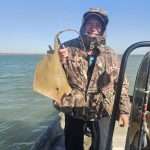
- Randy Rowley and his stingray
-

- The Gang at Cathy’s
-
- The Gang at Mama’s Kitchen
Boats can include Kevin McConnell’s, Randy Rowley’s, Daryl Shipper’s, and Wayne Weilnau’s bay boats, and possibly others. All four captains can take up to three sportsmen in their boats, in addition to them. For duck hunting, the boats are used to ferry the hunters to the hunting spots and then beached or anchored around 100 yards away. We fish from the boats, unless fishermen want to wade fish and the captain agrees. In which case the captain will take the fishermen to the desired wade fishing spot(s), if possible (factoring in water levels, the tide, etc.).
Daryl Shipper’s boat
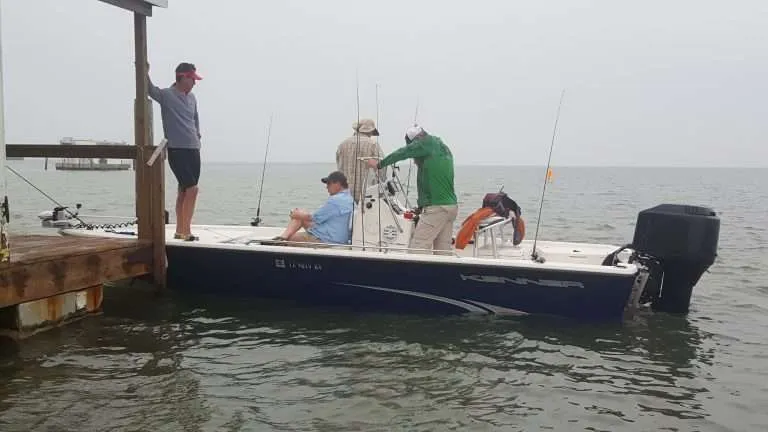
Randy Rowley’s boat
Costs:
- The participants (excluding the captain) will split the vehicle and boat gas, a boat wash after the event (to wash the salt and mud off), state or county park fees (if applicable), boat slip fees (if applicable), boat launch fees (if applicable), and toll road fees (if applicable). The captains have to replace their boat batteries, trailer tires and wheel bearings, etc., and repair things like their trolling motors more quickly due to taking FCS members and guests on such trips than they would if they didn’t take FCS members and guests on such trips; therefore, they are exempt from the above expenses. If you look at what the captains spend on the above, they guarantee you that they’re not making any money on these trips.
- For Corpus Christi, we’ll stay in an Airbnb house, a townhouse, or a motel.
- For Port O’Connor, Wayne Weilnau’s house can hold up to eight participants. If we have more participants going than that, some will have to stay at The O’Connor Inn (a waterfront inn on the Intercoastal), an Airbnb house, or a motel. We’ll take the maid cleaning fee to clean Wayne’s house, the The O’Connor Inn’s/Airbnb’s/motel’s cost, an extra boat(s) slip fee and divide it by the participants (not counting Wayne). If Wayne’s house is not available, all participants will stay at the O’Connor Inn, an Airbnb house, or a motel.
- Fishermen can use live and/or dead bait (and/or use artificial lures). If so, the captains will buy the bait and Wayne will divide the cost among everyone. Typically, Kevin and Wayne fish primarily with artificial lures, but will also fish with live and dead bait if artificial lures aren’t getting results. Daryl and Randy fish primarily with live and dead bait, but also with artificial lures.
- We’ll use ice for the fish boxes and drink coolers. The captains will buy the ice and Wayne will divide the cost among everyone.
- We’ll eat out or get drive-through food.
What to Bring If Bay Fishing
- Saltwater fishing license. If you bought a super combo license it includes your saltwater fishing license.
- Rod & Reel combos (at least two (in case you break one) and no more than four).
- Lures and/or terminal tackle for fishing with live and/or dead bait.
- Tackle box, bag, or backpack.
- Headlamp or cap light (waterproof is recommended).
- Clothing appropriate for the season (including a cap). You never know when it will rain on the coast, so bring rain gear.
- A fillet knife, knife sharpener (recommended), three gallon-sized Ziploc bags (as to be legal, you’ll need to have your fish in separate bags for separate days), and a small or medium-sized hard or soft ice chest to take your fish home in (if you get any). You won’t need a ice chest for your fish and a ice chest for your ducks (one will do). Leave it in your vehicle or where we’re staying.
- Drinks and snacks (optional; drinks are highly recommended). There are storage compartments in the boats to put your drinks and snacks in.
- Sunglasses (optional, but highly recommended).
- Bug repellent (optional).
- Waders (if you plan to do wade fishing; except during late spring, summer, and early fall trips).
What to Bring If Duck Hunting
- Texas hunting license and migratory bird endorsement and federal duck stamp. If you bought a super combo license it includes your hunting license and migratory bird endorsement, and saltwater fishing license but does not include a federal duck stamp.
- Shotgun. A 12 gauge piston-operated semi-automatic is recommended (but keep them clean, as if they get gunked up they’ll stop working). A recoil (aka inertia)-operated semi-automatic takes second place (as they kick more than piston-operated semi-automatics), followed by a pump (or slide)-action. A plug is required for semi-automatics and pumps capable of holding more than two shells in the magazine (almost all of them are) while hunting migratory game birds.
- Camo or dull non-cloth shotgun case. Cloth cases during waterfowl hunts tend to get muddy. A floating case is recommended. If your case is bright you’ll need to hide it well.
- Two boxes of steel shot (Winchester Xpert/Remington Sportsman/Federal Waterfowl/Kent FASTEEL Loads steel shot or HEVI-Steel shotgun shells, for three-inch chambers (if your gun is also chambered for three inches), in 2, 3, or 4 shot. Get the 1300 – 1500 FPS variants with 1 1/4 oz. of shot (in 12 gauge), as you’ll have more shot and you’ll have a better pattern. 10 gauges and 3 1/2? shells in 3 1/2 inch-chambered 12 gauges are overkill for ducks. Steel shot (if of adequate size) will kill ducks – there is no need for HEVI-shot, Tungsten, Bismuth, etc. You’ll pay a lot more for those shells and they aren’t needed.
- Camo or dull blind bag, shell bag, vest, or bandoleer. If your shell bag is bright (e.g., a red HEB shopping bag) you’ll need to hide it well. A floating blind bag is recommended.
- Headlamp or cap light (waterproof is recommended).
- Camo outer hunting clothes, including cap/hat and a face mask or face paint (face coverings are absolutely essential as oily skin glows in a duck’s eyes). You never know when it will rain, so bring rain gear.
- Waders (absolutely essential). Uninsulated breathable waders are recommended for warmer hunts. Neoprene breathable waders are recommended for colder hunts (if you wear 5mm thick neoprene waders on a September teal hunt you might cook yourself). We don’t put our waders on until we reach the boat ramp, unless we’re wearing uninsulated breathable ones.
- Bucket, stool, or folding chair. We usually hunt from natural cover, so you’ll need to see over it.
- Game shears (optional), a fillet knife, knife sharpener (recommended), and three gallon-sized Ziploc bags (as to be legal, you’ll need to have your ducks in separate bags for separate days), and a small or medium-sized hard or soft ice chest to take your ducks home in (if you get any). You won’t need a ice chest for your ducks and a ice chest for your fish (one will do).
- Ear plugs or muffs (electronic ones allow you to hold conversations).
- Drinks and snacks (optional; drinks are highly recommended).
- Non-mirrored shooting glasses or sunglasses (optional).
- Bug repellent (optional, but recommended).
The boat captains are required to have a life jacket for every passenger, so you won’t need one; however, you can bring your own if you want to.
Randy has extras of many of the items that are listed above (e.g., waders, floating shotgun cases, stools, small and medium-sized ice chests, a headlamp, rods and reels, lures, etc.) and will happily loan them if you let him know before we leave. Of course, if you borrow something and break or lose it he will expect reimbursement. Those who bring decoys (which is mainly Randy) will expect reimbursement when hunters shoot their decoys and they’re beyond repair.
For ducks, Randy usually starts out with a modified waterfowl choke if the ducks are coming into the decoys. If all he’s getting is shots as they fly past (pass shooting), he’ll switch to a full waterfowl choke. Clay target chokes often shoot tighter with non-lead shot (e.g., a modified clay target choke will often perform as a full choke with non-lead shot). A choke that delivers that performance should say that on the choke.
Here is what sitting in the typical cover looks like:

Or, if we find a blind that someone isn’t using, we can try to hunt it. Here’s what one looks like:

Randy has 111 decoys (33 mallards (including 28 decoys, two quiver ducks, a swimmer, a motorized duck, and a wind-activated duck that he only uses when it’s windy enough to spin its wings), 26 pintails, 16 redheads, 12 teal, 11 gadwalls, six canvasbacks, six buffleheads, and a widgeon. However, he’ll only bring 60 – 72 due to Big Cam’s (his boat) space limitations. Daryl, Kevin, and Wayne also have at least a dozen decoys each.
Expectations
These blasts and casts are a service to FCS members and guests, but the Event Coordinator/leader will enforce the below expectations:
- Follow the captain’s instructions and abide by the FCS Bylaws Regarding Conduct.
- Pay for your share of the vehicle and boat gas, motel rooms, and boat launch fees.
- Pay for items (that are not yours) that you broke or lost (including decoys that you shot and sank and lures that you borrowed and broke or lost).
- Help (including helping get the boats back on the trailers).
- Be prepared to fish (if others have to help you rig properly on the boat, it takes away from their fishing time). This does not apply to new fishermen.
- Control your dog during a hunt (a dog that wants to go play with the decoys or charge the ducks as they’re coming into the decoys will ruin the hunt for everyone).
- Talk quietly, especially when ducks are coming into the decoys (ducks can hear you and will veer away). Fish can also hear you and will swim away.
- Don’t be rude. Examples of rude behavior include deciding to go get coffee after the boat has already launched and your partners are ready to fish, throwing a cast net from the boat while your partners are actively fishing, and fishing with too many rods out – which prevents your partners from fishing at all. All of these examples have happened on FCS bay fishing trips.
- Show up.
- Be on time.
- Don’t have a pattern of canceling at the last minute.
- Read the Event Coordinator’s/leader’s emails and don’t ask questions that have already been answered in the emails (and you would have known the answers for if you had read the emails).
- Return the Event Coordinator’s/leader’s phone calls, emails, and/or texts, if he or she asks a question or asks you to acknowledge something.
Let Wayne know if you have any questions.
Lure recommendations
Soft plastics – Egret Baits’ VuDu Shrimp and VuDu Vixen, Z-Man’s EZ Shrimpz, scented Jerk Shad, Paddler, and Pogy, Berkley’s Gulp Alive Shrimp, Ghost Shrimp, Shrimp, Swimming Mullet, Pogy, Ripple Mullets, Mud Minnow/coakers, Salt Strong’s Slam Shaddy, and Saltwater Jerk Shad, Zoom’s Salty Super Fluke, Norton Lures’ Sand Shad, Sand Eel, and Bull Minnow, and Bass Assassin’s BANG Die Dapper, Sea Shad, Saltwater Shad Assassin, and Saltwater Curly Tail Shad.
Soft plastics colors – salt and pepper (Bass Assassin calls it Salt and Pepper Silver Phantom), white/red, red/white, and Bass Assassin’s Chicken on a Chain (light green and white with black specks and a chartreuse tail).
Jig heads – H&H Lure Double-Eye, Pro Shad, Rattilize, Arrow Head, Cocahoe, Strike King Trokar, Bass Assassin, and Z-Man Redfish Eye and Trout Eye. 1/8, 3/16, 1/4, or 3/8 oz. in red, white, or lead.
Spoons – Nacho Daddy Loaded Nachos, Johnson’s Silver Minnow and Gold Minnow, H&H Lure’s Secret Weedless Redfish Spoon, Strike King’s Sexy Spoon, and Nichols Lures’ Mojo Flutter Spoon. 1/2 – 1 ounce in gold or silver. These are particularly good for redfish and speckled trout. Redfish seem to prefer gold and trout seem to prefer silver.
Topwaters – walk the dog lures like Bomber’s Badonk-A-Donk, Heddon’s Zara Spook, Zara Spook Jr., and Chug’n Spook Jr., Rapala’s Saltwater Skitter Walk and Skitter V, MirrOlure’s Series III, Pro Dog Jr., or Top Dog Jr., and Yo-Zuri 3DB Topwater Pencil and 3-D Inshore Pencil; poppers like MirrOlure’s C-Eye Poppa Mullet Surface Popper and Heddon’s Chuggar Spook; and torpedo lures like River2Sea’s Whopper Plopper. The last two lures don’t come with saltwater hooks, so be sure to rinse the hooks with freshwater after use in saltwater. 1/2 – 1 ounce.
Lipless crankbaits/twitch baits – Bill Lewis’s Magnum Force, Mag-Trap, Knock-N-Trap, and Rat-L-Trap, MirrOlure’s MirrODine, MirrODine XL, Paul Brown’s Fat Boy, MirrOMinnow, MirrOMullett, Series III Catch 2000, 52 MR, She Dog, She Pup, Glad Shad, and XXL, and Rapala’s X-Rap Twitchin’ Minnow and Twitchin’ Mullet. 1/2 – 1 ounce.
Crankbaits – Bill Lewis’s Echo and MirrOlure’s MirrOLip 1/2 oz Suspending Crankbait. 1/2 – 1 ounce.
Hard jerk baits/swim baits – Yo-Zuri’s Pin’s Minnow Floating Swim Bait, Crystal 3-D Minnow, Crystal Minnow, 3DS 2-3/4″ Suspending Minnow, Mag Minnow, and 3-D Inshore, Bomber’s Jointed Long A, Saltwater Grade Heavy Duty Long A, and Magnum Long A, and Cotton Cordell’s Red-Fin. 1/2 – 1 ounce.
Hard bait lure colors – white with red heads, silver with red heads, silver with black backs, silver with blue backs, silver with pink backs, gold with pink backs, bone, and chartreuse.
Line Recommendations for baitcasting and spinning reels (you can use lighter line with spinning reels)
For topwater lures use 12 – 20 lb. test mono or 20 – 30 lb. test braid.
For diving lures use 14 – 20 lb. test fluorocarbon or 12 – 20 lb. test mono.
Leader Recommendations
20 – 30 lb. test fluorocarbon or mono.
2025 – FCS Meeting Reports
Posted by: | CommentsSelf-chartered Bay Fishing Trips
Posted by: | CommentsFCS hosts self-chartered bay fishing trips, primarily to Port O’Connor (POC).
We’ve had many successful fishing trips but only one of our boat captains is a guide and three of them have full-time jobs and only fish on weekends, so don’t expect to always catch limits on these trips.
We primarily target redfish, black drum, and speckled trout but can also catch sheepshead, flounder, jack crevalle, sharks, rays, and a variety of non-game fish such as hardheads and lady fish, so be prepared. For lure and line recommendations see the bottom of this page.
Here are pictures of some of our successes:
-

- Kevin McConnell with his personal best (PB) 44″ bull redfish
-

- Wayne Weilnau with his 44″ PB jack crevalle
-

- Blake Lieb with his 44″ PB black drum
-

- Burl Fulenwider with his 43″ PB bull redfish
-

- Blake with his 42″ bull redfish
-

- Burl with his 42″ bull redfish
-

- Blake Lieb and his 41″ bull redfish
-

- Jim McGee with his 37″ black drum
-

- Randy Rowley with his PB 35 3/4″ black drum
-

- Mike Curran with his 22″ and a 17″ speckled trout and a 22″ black drum
-

- Mike Curran with his 20 – 24″ redfish caught while wade fishing
-

- Kevin with his 23″ redfish and five speckled trout ranging from 17 – 19″, caught while wading
-

- Mike Curran with a 22″ and a 17″ speckled trout and a 22″ black drum caught while wade fishing
-

- Wayne with his 19″ speckled trout
-

- Zack Tumlinson with his 33″ bull redfish
-

- Jim and his spinner shark
-

- Burl Fulenwider with his 33 1/2″ black drum
-

- Zack and his 31″ bull redfish
-

- Jim McGee and his 31″ redfish
-

- Burl and his 31 1/2″ black drum
-

- Randy
-
- Blake Lieb with his 40″ bull redfish
-
- Zack Tumlinson with his 34″, 22 lb. black drum
-
- Blake Lieb with his 40″, 36 lb. black drum
-
- Isaac Lieb with his approximately 39″ black drum
-
- Jonathan Fleming and his 39 3/4″, 30.51-pound bull redfish
-
- Daryl Shipper and his approximately 39″ black drum
-
- Blake Lieb with his 37″, 31.18-pound black drum
-
- Burl Fulenwider with his approximately 30″ black drum
-

- Blake Lieb with his 30″ bull redfish
-

- Zach Tumlinson with his 38 1/2″ bull redfish
-
- Yuri Tomlinson with her bull redfish
-
- Zach Tumlinson with his 39″ bull redfish
-

- Zach Tumlinson with his 44″ black drum
-

- Yuri Gonzales with her 30 – 38″ bull redfish
-
- Jim McGee with his bull redfish
-

- Zach Tumlinson with a bull redfish
-

- Jim McGee with his 24″ sheepshead
-

- Wayne Weilnau with his 20″ sheepshead
-

- Zach Tumlinson with a redfish
-

- Daryl Shipper with his 35″ bull redfish
-

- Jim McGee with his 27″ jack crevalle
-
- Wayne Weilnau with his speckled trout
-
- Randy Rowley with his 20″ redfish
-

- Jim McGee with his 37″ black drum
-

- Jose Primera with 28″ redfish
-

- Ian Daniels with his whiting
-

- Randy Rowley with his speckled trout
-

- Chris Rowley with her speckled trout
-

- Jose Primeria with his speckled trout and gafttop
-

- Randy Rowley with his black drum
-

- Jim McGee, Harley Chu, and Wayne Weilnau with their sheepsheads
-

- Jim McGee with a bull redfish
-
- Chris Rowley with her sheepshead
-

- Daryl Shipper with 17 3/4″ speckled trout
-

- Randy Rowley with his sheepshead
-

- Jim McGee with his 18″ speckled trout
-

- Jim McGee with his 29″ bull redfish
-
- Wayne Weilnau, Harley Chu, and Binh Chu with a bull redfish
-

- Binh and Harley Chu with bull redfish
-

- Yuri Gonzales with her 36″ bonnethead shark
-

- Wayne Weilnau and his speckled trout
-
- Mark Moore and his 24″ speckled trout
-

- Randy Rowley and his 24″bonnethead shark
-

- Zach Tomlinson and his bull redfish
-

- Jim McGee and his black drum
-

- Harley Chu with hardhead catfish
-

- Burl Fulenwider with his black drum
-
- Ted Lieb and his blacktip shark
Boats can include Kevin McConnell’s, Randy Rowley’s, Daryl Shipper’s, and Wayne Weilnau’s bay boats, and possibly others. Kevin, Randy, Daryl, and Wayne can take up to three sportsmen on their boats, in addition to them. We fish from the boats, unless fishermen want to wade fish and the captain agrees. In which case the captain will take the fishermen to the desired wade fishing spot(s), if possible (factoring in water levels, the tide, etc.).
Daryl Shipper’s boat
Randy Rowley’s boat
Costs:
- The participants (excluding the captain) will split the vehicle and boat gas (the amount depends on the distance traveled and the number of people sharing the gas), a boat wash after the event (to wash the salt and mud off), state or county park fees (if applicable), boat slip fees (if applicable), boat launch fees (if applicable), and toll road fees (if applicable). The captains have to replace their boat batteries, trailer tires, wheel bearings, etc., and repair things like their trolling motors more quickly due to taking FCS members and guests on such trips than they would if they didn’t take FCS members and guests on such trips; therefore, they are exempt from the above expenses. If you look at what the captains spend on the above, they guarantee you that they’re not making any money on these trips.
- For Corpus Christi, we’ll stay in an Airbnb house, townhouse, or a motel.
- For Port O’Connor, Wayne Weilnau’s house can hold up to six people. If we have more participants going than that, some will have to stay at The O’Connor Inn (a waterfront inn on the Intercoastal), an Airbnb house, or a motel. We’ll take the maid cleaning fee to clean Wayne’s house, the rental cost of The O’Connor Inn/Airbnb’s/motel’s cost, an extra boat(s) slip fee and divide it by the participants (not counting Wayne). If Wayne’s house is not available, all participants will stay at The O’Connor Inn, an Airbnb house, or a motel.
- Fishermen can use live and/or dead bait (and/or use artificial lures). If so, the captains will buy the bait and Wayne will divide the cost among everyone. Typically, Kevin and Wayne fish primarily with artificial lures, but will also fish with live and dead bait if artificial lures aren’t getting results. Daryl and Randy fish primarily with live and dead bait, but also with artificial lures.
- We’ll use ice for the fish boxes and drink coolers. The captains will buy the ice and Wayne will divide the cost among everyone.
- We’ll eat out or get drive-through food.
What to Bring:
- Saltwater fishing license.
- Rod & Reel combos (at least two in case you break one; ask your captain what the maximum number is that you can bring – it’s usually no more than four).
- Lures and/or terminal tackle for live and/or dead bait.
- Tackle box, bag, or backpack.
- Headlamp or cap light (waterproof is recommended).
- Clothing appropriate for the season (including a cap). You never know when it will rain, so bring rain gear.
- Drinks and snacks (optional; drinks are highly recommended). There are storage compartments in the boats to put your drinks and snacks in.
- Sunglasses (optional, but highly recommended).
- Bug repellent (optional).
- Waders (if you plan to do wade fishing; except during late spring, summer, and early fall trips; ask your captain if he plans to do any wade fishing).
- A fillet knife, fillet board (recommended), and knife sharpener (recommended), four gallon-sized Ziploc bags (to be legal, you’ll need to have your fish in separate bags for separate days), and a medium-sized hard or soft ice chest to take your fish home in (if you get any; leave it in your vehicle or where we’re staying).
The captains are required to have a life jacket for every passenger, so you won’t need one. However, you can bring your own if you want to.
Randy has extras of many of the items that are listed above (e.g., cap lights, rods and reels, lures, etc.) and will happily loan them if you let him know before we leave. Of course, if you borrow something and break or lose it he will expect reimbursement.
Expectations
These fishing trips are a service to FCS members and guests, but the Event Coordinators/leaders will enforce the following expectations:
- Follow the captain’s instructions and abide by the FCS Bylaws Regarding Conduct.
- Pay for your share of the truck and boat gas, motel rooms, boat launch, and bait (if used) fees.
- Pay for items (that are not yours) that you broke or lost (including lures that you borrowed and broke or lost).
- Help (including helping get the boats back on the trailers).
- Be prepared to fish (if others have to help you rig properly on the boat, it takes away from their fishing time). This does not apply to new fishermen.
- Talk quietly – fish can hear you also and will swim away.
- Don’t be rude. Examples of rude behavior include deciding to go get coffee after the boat has already launched and your partners are ready to fish, throwing a cast net from the boat while your partners are actively fishing, and fishing with too many rods out – which prevents your partners from fishing at all. All of these examples have happened on FCS self-chartered bay fishing trips (all by the same man).
- Show up.
- Be on time.
- Don’t have a pattern of canceling at the last minute.3
- Don’t ask questions regarding information that has already been conveyed in the Event Coordinator’s/leaders emails (and you would have known the answers if you had read the emails).
- Return the Event Coordinator’s/leader’s emails, phone calls, and/or texts, if he or she asks a question or asks you to acknowledge something.
Let Wayne know if you have any questions.
How to cast a baitcasting reel.
Lure recommendations
Soft plastics – Egret Baits’ VuDu Shrimp and VuDu Vixen, Z-Man’s EZ Shrimpz, scented Jerk Shad, Paddler, and Pogy, Berkley’s Gulp Alive Shrimp, Ghost Shrimp, Shrimp, Swimming Mullet, Pogy, Ripple Mullets, Mud Minnow/coakers, Salt Strong’s Slam Shaddy, and Saltwater Jerk Shad, Zoom’s Salty Super Fluke, Norton Lures’ Sand Shad, Sand Eel, and Bull Minnow, and Bass Assassin’s BANG Die Dapper, Sea Shad, Saltwater Shad Assassin, and Saltwater Curly Tail Shad.
Soft plastics colors – salt and pepper (Bass Assassin calls it Salt and Pepper Silver Phantom), white/red, red/white, and Bass Assassin’s Chicken on a Chain (light green and white with black specks and a chartreuse tail).
Jig heads:
- Z-man Redfish eye or Trout eye 1/4 oz. swimbait jighead, 6th Sense Divine 1/4 oz. swimbait jighead, Strike King Saltwater Flats 1/4 oz. jighead, H&H Lure Double-Eye, Pro Shad, Rattilize, Arrow Head, Cocahoe, Strike King Trokar, also Bass Assassin. 1/8, 3/16, 1/4, or 3/8 oz. in red, white, or lead.
- 3/0 Berkley Fusion 1/8 oz. weighted swimbait hook or 3/0 Mustad 1/8 oz. weighted grip hook; or
- 3/0 or 4/0 offset worm hook (you’ll need to Texas-rig it – put a 1/4 oz. bullet weight about it or Carolina rig it with a 1/2 oz. egg sinker).
Spoons – Nacho Daddy Loaded Nachos, Johnson’s Silver Minnow and Gold Minnow, H&H Lure’s Secret Weedless Redfish Spoon, Strike King’s Sexy Spoon, and Nichols Lures’ Mojo Flutter Spoon. 1/2 – 1 ounce in gold or silver. These are particularly good for redfish and speckled trout. Redfish seem to prefer gold and trout seem to prefer silver.
Topwaters – walk the dog lures like Bomber’s Badonk-A-Donk, Heddon’s Zara Spook, Zara Spook Jr., and Chug’n Spook Jr., Rapala’s Saltwater Skitter Walk and Skitter V, MirrOlure’s Series III, Pro Dog Jr., or Top Dog Jr., and Yo-Zuri 3DB Topwater Pencil and 3-D Inshore Pencil; poppers like MirrOlure’s C-Eye Poppa Mullet Surface Popper and Heddon’s Chuggar Spook; and torpedo lures like River2Sea’s Whopper Plopper. The last two lures don’t come with saltwater hooks, so be sure to rinse the hooks with freshwater after use in saltwater. 1/2 – 1 ounce.
Lipless crankbaits/twitch baits – Bill Lewis’s Magnum Force, Mag-Trap, Knock-N-Trap, and Rat-L-Trap, MirrOlure’s MirrODine, MirrODine XL, Paul Brown’s Fat Boy, MirrOMinnow, MirrOMullett, Series III Catch 2000, 52 MR, She Dog, She Pup, Glad Shad, and XXL, and Rapala’s X-Rap Twitchin’ Minnow and Twitchin’ Mullet. 1/2 – 1 ounce.
Crankbaits – Bill Lewis’s Echo and MirrOlure’s MirrOLip 1/2 oz Suspending Crankbait. 1/2 – 1 ounce.
Hard jerk baits/swim baits – Yo-Zuri’s Pin’s Minnow Floating Swim Bait, Crystal 3-D Minnow, Crystal Minnow, 3DS 2-3/4 inch Suspending Minnow, Mag Minnow, and 3-D Inshore, Bomber’s Jointed Long A, Saltwater Grade Heavy Duty Long A, and Magnum Long A, and Cotton Cordell’s Red-Fin. 1/2 – 1 ounce.
Hard bait lure colors – white with red heads, silver with red heads, silver with black backs, silver with blue backs, silver with pink backs, gold with pink backs, bone, and chartreuse.
Rods & Reels, Lines, and Leaders – bass rods & reels work fine for bay fishing. Just be sure to wash the reels with freshwater after every use (even if you don’t get them wet; especially if you fish from a boat as the spray coming over the deck will get saltwater on them). Rods should be medium heavy or medium. Reels should be equipped with 12 – 17 lb. test monofilament or fluorocarbon line or 30 lb. test braid. If you use braid, be sure to tie on up to a 25 lb. mono or fluorocarbon leader, as braid is easy to cut. For topwater lures use mono in 12 – 15 lb. test. For diving lures use fluorocarbon in 14 – 17 lb. test or mono in 12 – 15 lb. test.


Gun Recommendations
Posted by: | CommentsSelf and Semi-guided Dove Hunts
Posted by: | CommentsFCS goes on several dove hunts each season. We presently hunt with a land owner near San Antonio and have four hunts scheduled with him for 2026. Kurt DeRuiter has hunted with him and has limited out several times. The worst that he did was 10 birds.
-
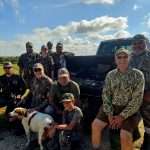
- The hunters
-
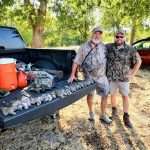
- Randy and Ryan Rowley at the Holland day lease with their limits
Costs:
- The hunt fee for semi-guided hunts is $150/afternoon. We usually do not tip for semi-guided dove hunts.
- We’ll split the vehicle gas. We’ll probably get drive-through food on the way to the hunt and on the way home.
- A 50% deposit will be required by a due date. Hunters who do not pay the deposit by the due date will be removed from the list of people who RSVPed for the hunt.
What to Bring:
- Texas Hunting license and migratory bird endorsement (formerly called a “stamp”). If you bought a super combo license it includes your hunting license and migratory bird endorsement.
- Shotgun. A 12 or 20 gauge piston-operated or recoil (aka inertia)-operated semi-automatic is recommended (keep piston-operated semi-automatics clean, as if they get gunked up they’ll stop working). A pump (or slide)-action takes second place. A plug is required for semi-automatics and pumps capable of holding more than two shells in the magazine (almost all of them are) while hunting migratory game birds.
- Three – four boxes per hunt of Remington Shur Shot Heavy Dove Load or equivalent in 8, 7 1/2, or 6 shot (depending on how good of a shot you are). 2 3/4-inch shells are recommended. You won’t need 3-inch or 2 3/4-inch magnum shells for dove.
- Bucket, stool, or folding chair.
- Camo or khaki outer hunting clothes, including cap, appropriate for the season. You never know when it will rain, so bring rain gear.
- Ear plugs or muffs (electronic allow you to hold normal conversations).
- Non-mirrored shooting glasses or sunglasses (optional but highly recommended).
- Drinks and snacks (optional; drinks are highly recommended).
- Bug repellent (optional).
- Sunscreen (optional).
- Game shears, a gallon-sized Ziploc bag, and a medium-sized ice chest or bag to take your birds home in (if you get any).
Expectations:
These hunts are a service to FCS members and guests, but the Event Coordinators/leaders will enforce the following expectations:
- Follow the Event Coordinator’s/leader’s instructions, the land owner’s rules, and abide by the FCS Bylaws Regarding Conduct.
- Pay for your share of vehicle gas.
- Control your dog (if you brought one).
- Talk quietly (dove can hear you and will veer away from the noise).
- Show up.
- Be on time.
- Don’t have a pattern of canceling at the last minute.
- Read the Event Coordinator’s/leaders emails and don’t ask questions that have already been answered in the emails (and you would have known the answers to if you had read the emails).
- Return the Event Coordinator’s/leader’s phone calls, emails, and/or texts, if he or she asks a question or asks you to acknowledge something.
RSVP’s for the Semi-guided hunts are required to Kurt, event coordinator. Also contact Kurt if you have any questions.
Baitcasting Rods & Reels for Freshwater and Bay Fishing
Posted by: | CommentsI haven’t fished in many years – do I want to re-start with a baitcaster combo or a spinning combo?
I’m a big fan of baitcasters, which is why I own 19 baitcaster combos (too many, I know). I’ve used them so long that I rarely have problems with them. However, for people who haven’t used them or haven’t used them much they can be daunting. For newbies, they backlash/birdsnest/snarl easily, especially when throwing into the wind or when switching to a lure of a different weight. Most have a centrifugal brake and a magnetic brake to help them not backlash. A lot of guys also use their thumbs to slow the spool down.
When they’re set correctly they offer the advantages of:
- strength, which gives better control of large fish in dense cover (they’re stronger than equivalent spinning reels; for most fish you won’t notice it but if you hook a large fish a stronger reel can make the difference is landing the fish vs. talking about the one that got away)
- superior casting accuracy (allowing anglers to place lures precisely; their design allows for greater casting distance, less line twist, making them ideal for fishing with heavier lures and high-torque techniques)
- sensitivity (their design feeds line straight down the rod, which enables fishermen to feel a lure working and a fish fighting better).
- One-handed casting (although some fishermen prefer using two hands).
Spinning reels also have advantages, including:
- They can use lighter lures (if you’re going after white bass or crappie with Roadrunners or crappie jigs, many baitcasters will struggle throwing such light lures, but spinning reels don’t have that problem).
- They don’t backlash in high winds like baitcasters are prone to do.
- Some fishermen can throw lures further and more accurately with a spinning reel.
On the con side they tend to coil the line, especially if it was not spooled on the reel correctly.
What reel to use also depends on what you’re going to fish for. For bass fishing, baitcasters are king. You’ll rarely if ever see a spinning reel in a bass tournament. For bay fishing (redfish, speckled trout, black drum, flounder, etc.) spinning reels are more often seen (possibly because it’s often windy at the coast).
~~~~~~~~~~~~~~~~~~~~~~~~~~~~~~~~~~~~~~~~~~~~~~~~~~~~~~~~~~~~~~~~~~~~~~~~~~~~~~~~~~~
Do you have a list of fishing gear needed for fresh water?
Rods
I’m partial to 7′ to 7′ 2″ length with medium heavy power and extra fast, fast (preferred), or moderate fast tips. I used to use mediums a lot, but now don’t as they’re too flimsy for most of the lures that I fish with. I’m partial to Falcon’s LowRider, BuCoo, or Redfish Caster Coastal Series, Abu Garcia’s Veritas and Vendetta, Castaway’s Nano, and St. Croix’s Bass X. I used to use All Star rods a lot (and still have at least three of them), but they went gone down in quality ever since they started making their Classic series and newer rods, particularly their rod guides.
Reels
I’m partial to at least a 7.1:1 retrieve, except for big crankbaits (with them I’ll use around a 5.4:1 retrieve). I’m partial to Shimano’s Curado and SLX, Abu Garcia’s Revo (I have four of them), Daiwa’s Tatula, or Lew’s Speed Spool (I have two of them). I used to think that I’d never find a reel that I’m happier with than my Revo’s, but my wife got me a Curado for my birthday and it’s now my favorite.
Line and Lures
See the bottom of the Self-chartered Freshwater Fishing Trips web page.
Ministry Events (Wild Game Dinners)
Posted by: | CommentsFCS puts on an annual Ministry Event (Wild Game Dinner) on a weekday night. We start preparing food at 4:30 PM and are usually done by 7:30 PM. We have had them at the St. George’s Court apartment complex and the Pathways at Northgate apartment complex. St. George’s Court primarily houses elderly people, some of whom are physically disabled. Northgate houses primarily single women and their children.
Here are some pictures from Wild Game Dinners:


The following are needed to make these events successful:
- Volunteers (setting up and breaking down tables and chairs, preparing food for cooking, cooking, and shuttling food to the serving area, bringing empty pans back to the cooking area, and clean up).
- Donations of ready-to-cook wild game (e.g., deer and hog link sausage, deer and hog steaks, dove and waterfowl breasts (preferably deboned for the latter), pheasant, chukar, quail, turkey, and filleted fish). Wild game that we can’t use includes ground venison and pork, whole birds and fish (just gutted), and game that is freezer burnt.
- Donations of money – if you don’t have wild game but would like to contribute, we’ll happily take monetary donations.
If you would like to volunteer or make a donation, contact Tim Zyla. Also contact Tim if you have any questions.
Yearly Attendance and Membership Rankings (Numbers for 2024 are Bolded)
Posted by: | Comments| Participants | Number of events | Attendees per event | Supporting Members |
| 618 | 76 | 15.50 | 105 |
| 563 | 76 | 14.63 | 89 |
| 555 | 75 | 13.86 | 88 |
| 514 | 74 | 13.71 | 84 |
| 496 | 73 | 13.37 | 81 |
| 484 | 73 | 13.33 | 70 |
| 478 | 68 | 13.09 | 67 |
| 465 | 68 | 12.73 | 61 |
| 456 | 63 | 12.72 | 60 |
| 452 | 63 | 12.07 | 59 |
| 449 | 62 | 11.74 | 59 |
| 441 | 60 | 9.93 | 59 |
| 428 | 57 | 9.57 | 58 |
| 418 | 56 | 9.18 | 57 |
| 407 | 54 | 9.13 | 56 |
| 407 | 52 | 9.11 | 52 |
| 400 | 52 | 9.00 | 49 |
| 395 | 51 | 8.94 | 48 |
| 361 | 47 | 8.80 | 47 |
| 300 | 41 | 8.79 | 34 |
| 291 | 27 | 8.49 | |
| 285 | 27 | 8.47 | |
| 280 | 23 | 7.51 | |
| 279 | 21 | 7.50 | |
| 270 | 21 | 7.20 | |
| 259 | 21 | 7.17 | |
| 233 | 18 | 7.11 | |
| 229 | 18 | 6.79 | |
| 201 | 17 | 6.63 | |
| 191 | 17 | 6.29 | |
| 181 | 16 | 6.00 | |
| 146 | 15 | 5.99 | |
| 144 | 14 | 5.88 | |
| 123 | 11 | 5.77 | |
| 36 | 5 | 5.28 | |
| 21 | 5 | 4.32 | |
| 9 | 1 | 4.20 | |
| New Members | Membership Renewals | First-time Guests |
| 32 | 52 | 50 |
| 30 | 49 | 47 |
| 24 | 40 | 41 |
| 21 | 36 | 41 |
| 20 | 34 | 40 |
| 17 | 31 | 40 |
| 16 | 30 | 39 |
| 13 | 28 | 38 |
| 13 | 28 | 38 |
| 12 | 28 | 38 |
| 12 | 27 | 34 |
| 11 | 25 | 33 |
| 10 | 21 | 33 |
| 10 | 20 | 32 |
| 10 | 19 | 32 |
| 10 | 16 | 30 |
| 10 | 30 | |
| 10 | 29 | |
| 10 | 24 | |
| 10 | 23 | |
| 10 | 22 | |
| 9 | 16 | |
| 9 | 13 | |
| 7 | ||
| 7 | ||
| 5 | ||
| 5 | ||
| 5 | ||
| 5 | ||
| 5 | ||
| 4 | ||
| 4 | ||
| 3 | ||
| 2 | ||
| 2 | ||
| 1 |
Fillet Knives
Posted by: | CommentsWhat fillet knives do you recommend that don’t have to be sharpened frequently?
Corded
The striper guides who I know that fish on Lake Buchanan use the titanium blade version of the American Angler Pro Electric Fillet Knife with 5 Blades AMA32352. Titanium blades will stay sharp longer, but that version is no longer available on American Angler’s website, so they’re hard to find.
Cordless/rechargeable
The striper guides who I know that fish on Lake Buchanan don’t like cordless/rechargeable knives. They say that their motors don’t last. However, they clean fish several times a week, so for the weekend fishermen they’ll probably be just fine.
Rapala R12 Heavy-Duty Lithium Fillet Knife Combo & Replacement 9” Blade has a good reputation. If I were to buy a rechargeable knife, this would be the one.
Kevin McConnell likes the Bubba Blade Lithium Ion Electric Fillet Knife with 4 Blades.
Regular Fillet Knives
Dexter 8” fillet knife. Out of all the fillet knives that I’ve owned, this one seems to hold its edge the longest. Their 8” version is a good compromise between their sometimes too small 7” and sometimes too big 9” versions
For big, bony fish I like the Danco Pro Series 9″ Serrated Fillet Knife. A serrated knife goes a long way in keeping regular fillet knives sharp.
Burl Fulenwider likes the Bubba 9” fillet knife.
FCS Chartered Fishing Trips Fish Sharing Requirement
Posted by: | CommentsOn FCS chartered fishing trips, caught fish will be distributed proportionally by the guide(s). For example, if a group of four fishermen caught 16 hybrid bass, each fishermen will receive four bass each (eight fillets). It doesn’t matter if you caught more or less than the other fishermen. The guide(s) usually have only one fish box and can’t keep your fish separate from the others. If you can’t share a harvest don’t go!
Scorecard
Posted by: | CommentsWelcome to the FCS Clay Target Scorecard page! This page contains a spreadsheet that has most Sporting Clays (mainly), Skeet, and 5-Stand scores and 1st place, 2nd place, and 3rd place finishes from 1993 to the present. Unfortunately, scorecards were not always turned in after every shoot or sometimes for our early shoots they were turned in but we only recorded the scores on those who placed (the first place or top three finishers). However, all but two of the shoots since 6/20/98 show every competitor.
The averages are figured on a round of 50 sporting clays or 5-stand targets basis. Consequently, skeet shoots are not included in each shooters sporting clays/5-stand average as only 25 targets were shot and skeet averages cannot be included with sporting clays averages as skeet’s an easier game.
Capitol City Clays (where the vast majority of our shoots have been held) added a hunters course in 2005. This course is easier than their previous masters course, consequently the averages for shooters who just shot the masters course or a combination of the two courses will be lower than shooters who have just shot the hunters course.
The scores can be viewed as follows:
Annual Tab – lists monthly scores, annual scores, and 1st-3rd places of each individual by year.
FCS Summary Tab – summarizes annual scores and 1st-3rd places for each year, and cumulative scores and 1st-3rd places for all years.
Top Shooters Tab – lists top scoring shooters from 1993 to the present.
Click on the link below to view scores of the FCS Clay Target Shoots – wait patiently for a few seconds while it downloads. To exit, hit left arrow instead of hitting “x” (If the Windows Security window pops up, you can hit “X” to view the score sheet).
===============================================================
Does FCS have assigned spots for dove hunts?
Posted by: | CommentsFCS Season Dove Lease Near Bartlett
Posted by: | CommentsAs of 8/7/14, the lease is closed – we are no longer accepting additional members.
Here’s a birds-eye map (satellite view) of the lease (we can’t X out the non-huntable area in Google Maps, but you’ll see it in the below picture). You’ll see the barn (to the right of the center), the fields, the tanks, the creek, and the wooded areas. Here’s a picture of the lease, and four pictures from 7/12/24:
If you’re a Facebook Friend of Ken Miller, he has a lot of pictures of the lease on his Facebook page.
Fishing Line for Baitcasters
Posted by: | CommentsWhat line do you recommend for baitcasters?
If targeting largemouth bass, I prefer 12 lb. or 14 lb. test Suffix Elite monofilament (mono). Mono is good for most topwaters, crankbaits, spinnerbaits, chatterbaits, hard jerkbaits, hard swimbaits, spoons, and slabs. Mono is regarded as all-purpose line (or for most purposes).
Fluorocarbon (fluoro) is better at getting lures to dive deeper, but it can pull topwaters down, so don’t use it for them. I prefer 14 or 17 lb. test Berkley Vanish.
For most soft plastics, I use 30 lb. test Suffix 832 braid. For frogs, I use 50 or 65 lb. test braid, to pull bass out of lily pad fields or thick grass.
If targeting white bass, I use 8 lb. or 10 lb. test Suffix Elite mono.
If targeting crappie, I use 6 lb. Suffix Elite mono.
If targeting stripers, hybrids, or catfish, I’d use 20 lb. test Berkley Big Game or Suffix Siege mono.
If targeting redfish, speckled trout, black drum, sheepshead, etc., I’d use 15 lb. Berkley Big Game or 17 lb. test Suffix Siege mono. If targeting bull redfish, oversized black drum, jack crevalle, etc., I’d use 20 lb. test Berkley Big Game or Suffix Siege mono.
I typically don’t have rod/reels dedicated to stripers, hybrids, catfish, or bay species, so I use by bass rod/reels, typically with 12 or 14 lb. test Suffix Elite mono.
When choosing fishing line, don’t use line that is too stiff (e.g., 20 lb. test mono for bass) as it will impede a lure’s action, or too light (e.g., 8 lb. test mono for bass) as a big fish can break it, so use the middle road.
Chartered Bay Fishing Trips
Posted by: | CommentsFCS has occasional chartered bay fishing trips, usually in the spring or summer, usually out of Port O’Connor, and usually in conjunction with a self-chartered bay fishing trip. The most that we have taken is 15 participants, which required three guides/boats. We have caught speckled trout, redfish, black drum, and several non-game fish.
Here are pictures from some of our chartered bay fishing trips:
-

- Jim McGee with his 41″ bull redfish
-
- Zack Tumlinson with his 33″ bull redfish
-
- Jim McGee and his 31″ redfish
-
- Zack and his 31″ bull redfish
-
- Jim and his spinner shark
-

- Randy and his redfish
-

- Chris and her speckled trout
-

- Randy and his speckled trout
-

- Chris fighting a trout
-

- Daryl Shipper, Burl Fulenwider, Randy Rowley, and Chris Rowley with Randy’s redfish and their 13 speckled trout
-

- The catch from Captain Marty’s boat
Costs:
- If we have four fishermen on a boat the cost is around $150 per person. The guide(s) will supply the boat, rod and reel combos, landing nets, and a fish box. They’ll clean the fish and bag them. The price does not include bait (for some guides), shared gas, eating out on the way home, and an optional but highly recommended tip. A 20% tip would be around $30. We recommend tipping based on the effort, not the results.
- We’ll split the vehicle gas. If we take a toll road, because we’re running late, we’ll split that fee.
- We’ll eat out or get drive-through food.
- Most guides clean the fish for you for an additional fee. Or you can clean them yourself.
- For lodging, see that section in the Self-chartered Bay Fishing Trip web page.
What to Bring:
- Saltwater fishing license.
- Clothing appropriate for the season (including a cap). You never know when it will rain, so bring rain gear.
- A medium-sized ice chest or bag to take your fish home in (if you get any; leave it in your vehicle).
- Drinks and snacks (optional; drinks are highly recommended). There are storage compartments in the boats to put your drinks and snacks in.
- Sunglasses (optional, but highly recommended).
- Bug repellent (optional).
- Headlamp or cap light (optional) – not needed if we’ll start in the day light.
The captains are required to have a life jacket for every passenger, so you won’t need one. Don’t bring your own tackle. The captains will fillet the fish and put them in Ziploc bags, so you won’t need to bring a fillet knife, knife sharpener, fillet board, or Ziploc bags.
Expectations
These fishing trips are a service to FCS members and guests, but the Event Coordinators/leaders will enforce the following expectations:
- Follow the captain’s instructions and abide by the FCS Bylaws Regarding Conduct.
- Pay for your share of vehicle gas.
- Help when the captain asks you to.
- Talk quietly – fish can hear you also and will swim away.
- Show up.
- Be on time.
- Don’t have a pattern of canceling at the last minute.
- Don’t ask questions regarding information that has already been conveyed in the Event Coordinator’s/leaders emails (and you would have known the answers if you had read the emails).
- Return the Event Coordinator’s/leader’s emails, phone calls, and/or texts, if he or she asks a question or asks you to acknowledge something.
An RSVP and payment in full is required to Wayne Weilnau. Also contact Wayne if you have any questions.
Lake Conroe Duck Hunting and Fishing
Posted by: | CommentsWe are considering Thanksgiving in a VRBO on Lake Conroe. Do you have any insights to the fishing and duck hunting there?
I’ve never been there. Ragan Brock replied to an email that I sent out about the low water in our duck-hunting lakes on 9/5/23, “I grew up on Lake Conroe and though it does have public access I would suggest steering clear unless it’s the last possible resort! Very low activity on that lake unless everything freezes over.”
What I read on one of my duck hunting Facebook pages was that hunters concentrate on the north half of the lake, specifically above Hwy 1375. There are coves and islands. Launch at the Cage boat ramp or Stupefied Lake campground.
Here’s some fishing tips:
https://tpwd.texas.gov/fishboat/fish/recreational/lakes/conroe/
There are many more websites on Conroe if you do a Google search.